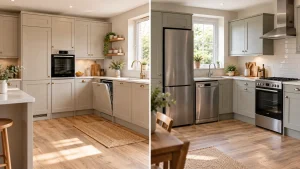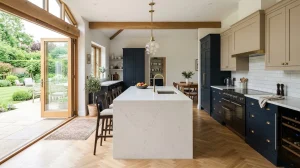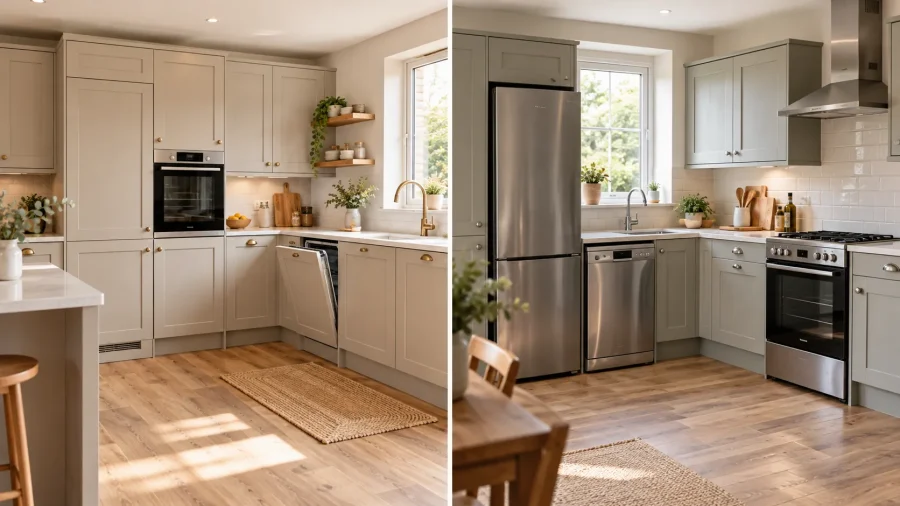
Picking kitchen appliances isn’t only a style call. It changes how much floor space you keep, what the kitchen costs and how much the room annoys you on a busy weeknight. Early in a new kitchen plan, almost everyone hits the same fork: integrated or freestanding?
Integrated appliances go inside the cabinets, usually with a door that matches the units. Freestanding ones come in their own casing and just stand there, in view.
Both work fine. Which one suits you depends on the house, how you cook and what you want the room to look like. So here’s what actually separates them.
What Are Integrated Kitchen Appliances?
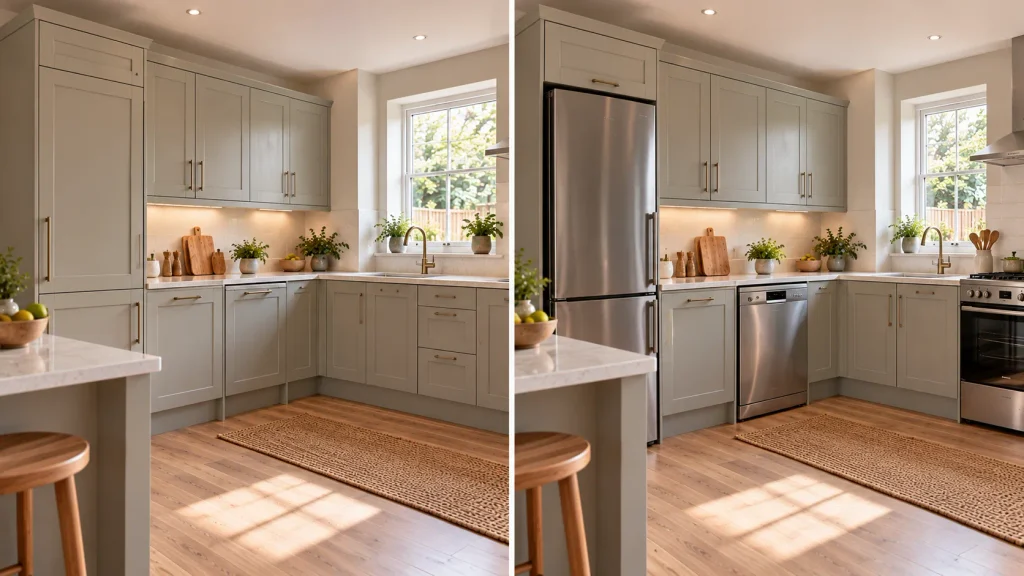
Integrated kitchen appliances are fitted into your units, so the kitchen looks like one design instead of a set of separate boxes. Some are fully hidden behind a door. Built-in ovens aren’t hidden, but they sit flush in the cabinetry.
The usual ones are integrated fridge-freezers, dishwashers, washing machines, built-in ovens and microwaves.
Most people choose them for the look. The fronts can match your cabinets, so the line stays unbroken. That’s why you see them in so many modern and minimalist kitchens.
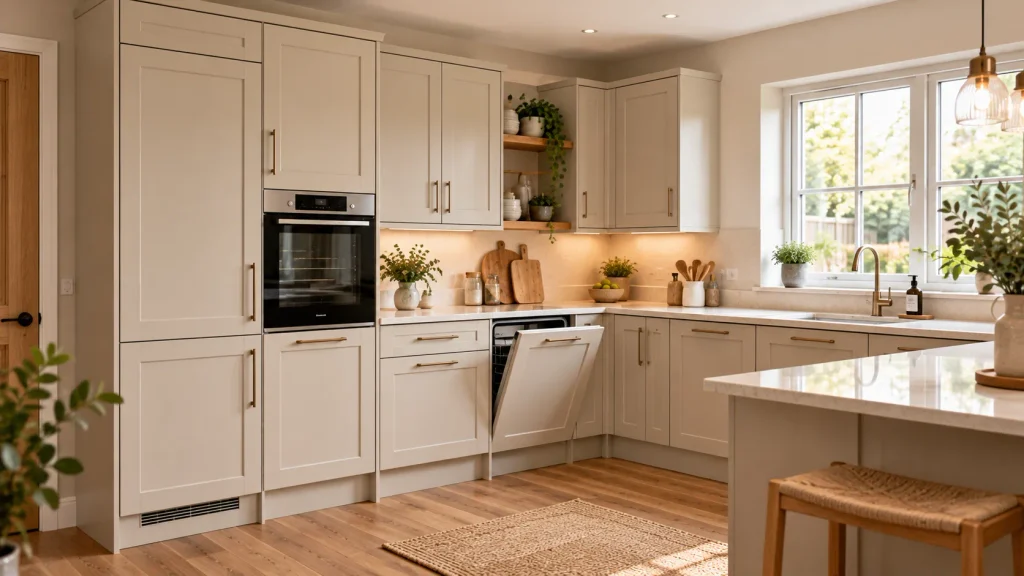
They help in open-plan homes too. If the kitchen runs straight into the dining or living area, you might not want a fridge and a dishwasher in full view of your guests.
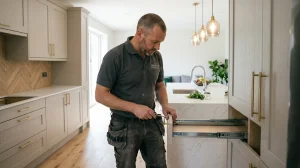
There’s a catch and it’s planning. Before you buy a model, you need the cabinet sizes, the door fittings, the ventilation and the installation details sorted.
What Are Freestanding Kitchen Appliances?
Freestanding appliances are standalone units. They don’t need a cabinet door in front of them. The range of sizes, styles and finishes is huge, so finding one that fits is rarely hard.
That covers freestanding fridge-freezers, cookers, washing machines, dishwashers and tumble dryers.
The selling point is flexibility. If one dies in a few years, you can usually pick from plenty of models, as long as the new one fits the gap and the connections match.
They also go easier on a tight budget. And if you’d rather choose each appliance on its own merits, without building the cabinets around it, this is the way to do it.
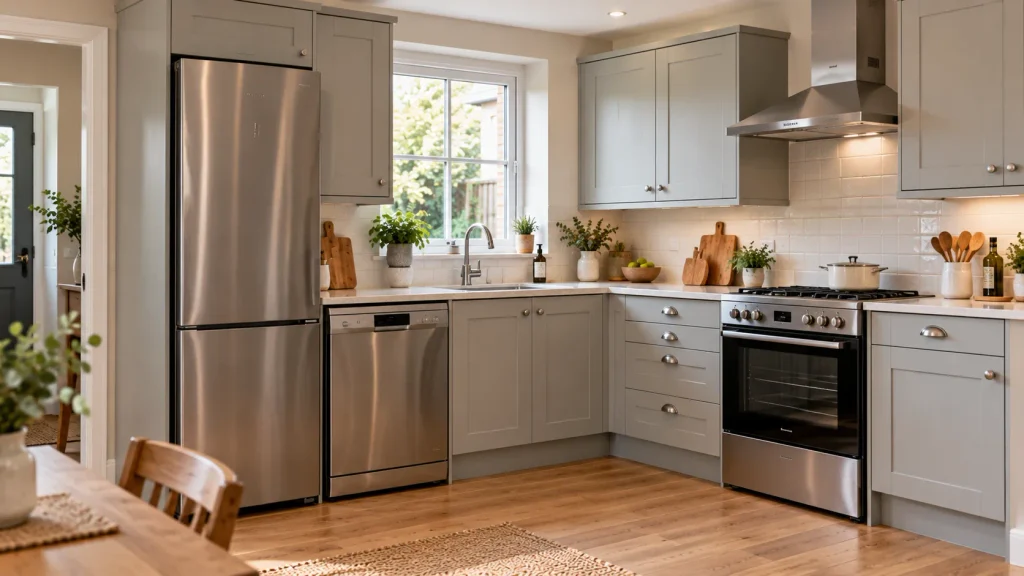
Looks are the weak spot. You see them all the time, so the finish might clash with your units. They also need room around them for installing, opening the door and cleaning.
Integrated vs Freestanding Appliances: What Is the Difference?
It mostly depends on what you care about.
- Appearance: Integrated appliances blend in and keep things tidy. Freestanding ones stay on show and some people like that. A good cooker can be the best-looking thing in the room.
- Cost: Integrated can add extras like cabinetry, door panels and fitting. Freestanding often needs fewer cabinet-specific parts, but the total still swings a lot.
- Replacement: Replacing an integrated appliance means checking the cabinet size and fittings first. Freestanding is usually simpler if the new one fits the same gap.
- Flexibility: Freestanding lets you change models or move things around later. Integrated is stuck with the cabinet layout.
- Cleaning: Both need regular cleaning. Integrated fronts hide some of the mess. Gaps beside freestanding units collect crumbs and dust and you won’t see it until you look.
Neither wins every time. Your layout, your budget and how you use the kitchen should make the call.
Which Appliances Should You Choose for a Small Kitchen?
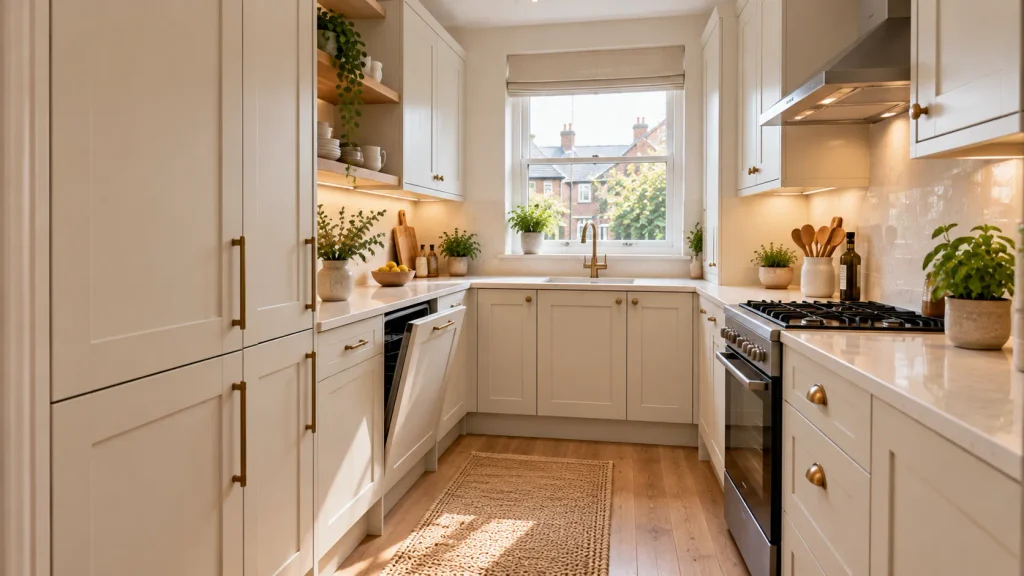
In a small kitchen, every centimetre counts.
Integrated appliances cut down the contrast between the appliances and the cabinets. A tight kitchen can look calmer and less cluttered because of it.
They don’t save space on their own, though. They still need the right cabinet dimensions and the usable capacity can end up smaller than a similar freestanding model.
Measure the width and depth of the gap first. Check which way the doors open. Then stand in the room and ask yourself if you can still walk around without squeezing past things.
Sometimes a mix is the sensible answer. Integrated where it helps, freestanding where it’s easier.
Which Is Better for an Open-Plan Kitchen?
Integrated appliances are a popular pick for open-plan kitchens. They help the design carry on from the kitchen into the dining and living areas.
A fridge-freezer and a dishwasher can sit behind matching cabinet fronts, for example. A built-in oven fits neatly into a tall unit.
Freestanding can look good here as well. A stainless-steel cooker or a big range cooker can suit the room just fine.
Try looking at the kitchen from the sofa. Would you rather the appliances were hidden? And how do the finishes sit next to your furniture and flooring?
Are Integrated Appliances More Expensive?
There’s no fixed price gap between integrated and freestanding appliances. The cost depends on the model, the brand, the size, the features and the installation.
With integrated, you might pay for cabinet compatibility, furniture doors, hinges, fitting and the odd adjustment.
With freestanding, the list is different: purchase price, delivery, installation, taking away the old appliance and any plumbing or electrical work.
So the price on the box doesn’t tell you much. Add up everything for each option, then compare.
Planning a new fitted kitchen? Choose your appliances early. If you don’t, you could order cabinets that don’t suit the models you end up wanting.
Can You Mix Integrated and Freestanding Appliances?
Yes. Nobody says they all have to match.
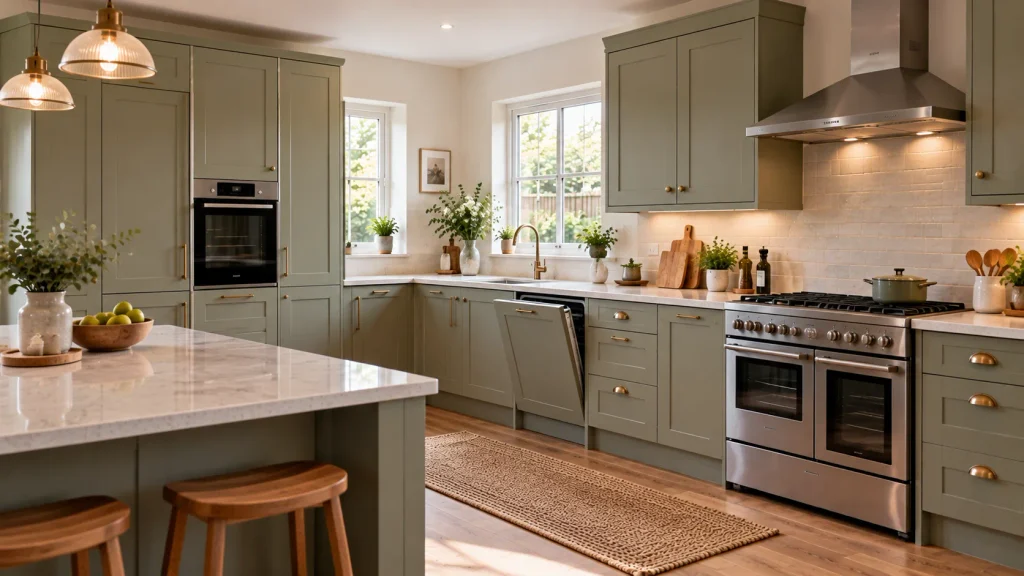
Plenty of people go for the dishwasher and fridge-freezer, then buy a freestanding cooker as the centrepiece. Others fit a built-in oven in the kitchen and keep a freestanding washing machine in the utility room.
Mixing lets you balance looks, flexibility and cost.
Just plan them together. Check the sizes, door clearances, ventilation and service connections before the kitchen design is final.
What Should You Check Before Buying Kitchen Appliances?
Go through this before you buy:
- Measure carefully: Get the width, height and depth and leave space for doors and ventilation.
- Check installation requirements: Follow the manufacturer’s instructions on clearances, ventilation and fitting.
- Consider your household needs: How you cook, how much food you store and how much washing you do will tell you what capacity you need.
- Plan connections: Make sure the electrics, water supply and drainage are there, right where the appliance will sit.
- Think about future replacements: A setup that’s easy to maintain and update will save you hassle down the line.
- Coordinate appliances with your kitchen design: Settle the models and sizes before anyone orders the cabinets.
A little planning now can save you fitting problems and last-minute changes.
Final Verdict: Which Kitchen Appliances Are Right for You?
Integrated kitchen appliances make sense if you want a seamless finish and a fitted kitchen that looks pulled together. They’re especially good in modern designs and open-plan homes.
Freestanding appliances might suit you better if flexibility matters, if you want more models to pick from, or if you’d like replacing them to be easy.
You can use a bit of both, too. Let your space and budget decide.
The right answer balances looks, practicality and what you’ll need over the years. Sort out your layout and your appliances early and the kitchen is far more likely to look good and work well.
Whichever way you go, the appliances should fit how you live and the room you’ve got. Compare them properly before you decide.
Frequently Asked Questions
Are integrated kitchen appliances worth it?
They can be, if you like a coordinated look and want your appliances to blend into the cabinets. Just think about the extra fitting needs and what replacing them later will cost.
Are freestanding kitchen appliances cheaper?
Their cabinet-related costs are often lower. The total still depends on the appliance, the installation and any connections you need, so compare full costs first.
Can I replace an integrated appliance with a freestanding one?
Sometimes. You may have to alter or remove part of the cabinetry. Check the space, the connections and the installation needs before you start.
Do integrated appliances make a kitchen look bigger?
They look more uniform, which can make a small kitchen feel less cluttered. They don’t add much usable space, though.
Can I mix integrated and freestanding appliances?
Yes. Using both lets you balance design, cost and flexibility. Plan the layout and the installation needs carefully and it works fine.