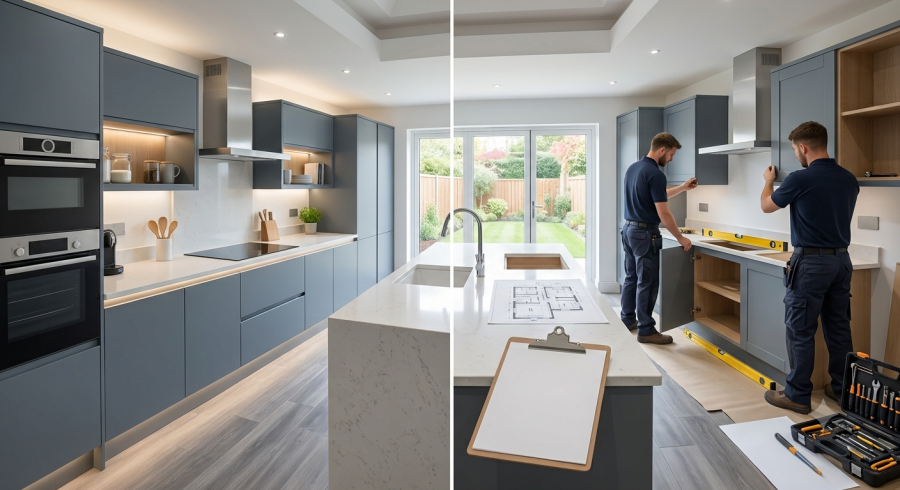
A new kitchen tends to be one of those upgrades that pays for itself in more ways than one. Better cooking space, more storage, and yeah, it usually makes the house more appealing too if you ever sell. But before any cabinets get picked out, there’s one question almost everyone ends up asking: what’s the average cost of a new kitchen UK really sitting at these days?
Honestly, there isn’t one clean answer. Every kitchen project plays out differently — size of the room, the materials you’ve got your eye on, the appliances going in, and how much actual work the job needs. Sort these out early on and budgeting stops feeling like guesswork.
This guide walks through what actually drives the average cost of a new kitchen UK, what tends to push that number up or down, and a few real ways to keep your spending from getting out of hand.
What Is the Average Cost of a New Kitchen UK?
It comes down to the style of kitchen you want and how much work goes into actually getting it.
A basic setup — standard cabinets, standard worktops — will cost noticeably less than a bespoke kitchen with premium finishes and built-in appliances. Not exactly a surprise there.
Installation matters too, and it’s easy to underestimate. Labour, plumbing, electrics, flooring, decorating — all of it adds to the final number, even the bits people don’t think about until the invoice lands.
Plan ahead a little, and the whole spending side of things stays a lot more under control.
Factors That Affect the Average Cost of a New Kitchen UK
A handful of things really decide where the final price lands.
Kitchen Size
The bigger the room, the more cabinets, worktop, flooring, and installation hours it eats up. Simple as that.
Kitchen Units and Cabinets
Cabinets are usually the part that eats up the biggest chunk of the budget. Go with ready-made units and you’ll keep costs down. Opt for custom-built ones, though, and the price climbs — makes sense, since they’re built specifically around your space rather than off a standard template.
Worktop Materials
The worktop you go with shifts the price quite a bit. Laminate stays cheap. Quartz, granite, solid wood — all of those push the number up fast.
Kitchen Appliances
New appliances change how a kitchen looks and functions almost overnight. Ovens, hobs, extractor fans, fridges, dishwashers — each one adds to the running total.
Installation and Labour
This covers cabinet fitting, worktop installation, plumbing, electrics, flooring, and the finishing touches. Labour costs move depending on the size and complexity of what’s actually being done.
What Is Included in a Kitchen Installation?
There’s a lot more to a kitchen install than just hanging cabinets and walking away.
A full installation can pull in:
- Kitchen cabinets
- Worktops
- Sink and tap installation
- Built-in appliances
- Splashbacks
- Plumbing work
- Electrical installation
- Flooring
- Lighting
- Painting and decorating
The more of these your project touches, the higher the final cost climbs — pretty much in lockstep.
New Kitchen Installation vs Kitchen Refurbishment
Honestly, a lot of people aren’t even sure which one they need until they sit down and think about it.
A kitchen refurbishment is the lighter route — new cabinet doors, fresh worktops, maybe some new flooring or lighting thrown in, but the layout itself doesn’t move an inch.
A new kitchen installation goes deeper. Cabinets, appliances, plumbing — all replaced, and sometimes the layout gets reworked entirely too.
If the current layout still works for you, refurbishing is usually the smarter, cheaper move.
Hidden Costs to Consider
A few expenses slip past people fairly often when they’re putting a kitchen budget together.
Watch out for things like:
- Plumbing upgrades
- Electrical improvements
- Wall repairs
- Floor preparation
- Plastering
- Waste disposal
- Decorating
- Structural work
A small contingency fund tucked aside helps absorb any of this if it turns up mid-project — and it often does.
Ways to Reduce the Cost of a New Kitchen
Cutting costs and cutting corners on quality aren’t actually the same thing — good to keep that in mind.
Sticking with the layout you’ve already got saves you on plumbing and electrical work pretty much straight away. Getting a few quotes from different installers before deciding also helps — prices can vary more than you’d expect for similar work.
Mid-range, durable materials over luxury ones is another easy way to keep things reasonable. And buying appliances around seasonal sales? Small effort, decent savings.
Popular Kitchen Design Ideas
Most homeowners now want a kitchen that looks sharp but still earns its keep every single day.
Features showing up a lot lately:
- Kitchen islands
- Integrated appliances
- Soft-close drawers
- Quartz worktops
- Open shelving
- LED lighting
- Pull-out storage
- Modern cabinet finishes
Put a few of these together and you get a kitchen that’s both practical and genuinely nice to look at.
Why Choose Professional Kitchen Installers?
Kitchen installation isn’t really a guesswork job — it takes real precision and experience to get right.
Cabinets need exact fitting, worktops need correct installation, and plumbing or electrical work has to meet proper safety standards, full stop.
Installers who’ve done this for years know how every stage fits together, which helps sidestep the kind of mistakes that turn expensive fast.
Going professional also means the kitchen tends to hold up well for years, instead of needing constant little fixes.
Planning Your Kitchen Budget
A realistic budget from day one makes the entire renovation feel a lot less chaotic.
Decide roughly what you’re willing to spend first. Sort the must-haves from the nice-to-haves. Compare materials, and get quotes from more than one installer before locking anything in.
Set a little money aside for surprises too — there’s almost always one, no matter how well you plan.
Good planning, more than anything else, is what keeps the whole thing moving smoothly from start to finish.
What affects the average cost of a new kitchen in the UK?
It mostly comes down to kitchen size, the materials and appliances you pick, labour costs, and whether any plumbing or electrical work needs sorting out.
What is included in a kitchen installation?
Most installations end up covering cabinets, worktops, plumbing, electrical work, flooring, lighting and all the finishing details.
Is kitchen refurbishment cheaper than installing a new kitchen?
Yes, generally speaking. Refurbishment works out cheaper simply because the existing layout stays untouched.
How can I reduce the cost of a new kitchen?
Sticking to your current layout, comparing a few quotes, choosing practical materials and timing appliance purchases to coincide with sales can all help.
Should I hire professional kitchen installers?
In most cases, yes. They tend to get the fitting right the first time, which usually means the kitchen lasts longer without issues.
Conclusion
Knowing roughly where the average cost of a new kitchen UK lands before you start makes budgeting a lot less stressful. Every kitchen project is different, so the final number always comes back to design, materials, installation work and whatever extra improvements get added along the way.
With a bit of careful planning, a realistic budget, and the right installers handling the work, you end up with a kitchen that’s practical, good-looking, and built to last for years.