A new kitchen sounds simple enough — until you actually start planning one. Then the questions pile up fast. Where do you even begin? The kitchen has to do more jobs at once than almost any other room in the house. Look decent. Survive daily abuse. Keep working without falling apart.
Ask ten homeowners in Wolverhampton why they’re redoing theirs, and you’ll get ten different answers. Storage ran out for some. For others, the kitchen just stopped matching the rest of the house. A few simply want more out of a room that’s been underperforming for years. Different starting points, but mostly the same underlying need: understanding how the installation actually unfolds before committing money to it.
That’s really the point here — a plain look at what kitchen installation involves, why planning ends up mattering more than people think, and what’s worth working through before a single cabinet goes up.
Why Are Homeowners Choosing Kitchen Installation in Wolverhampton
No two homes age the same way. Some kitchens are just old — worn handles, tired worktops, the usual wear and tear. Others were never quite right to begin with, even when they were new.
Storage complaints come up constantly. So do bad layouts, which have a knack for turning something as ordinary as cooking dinner into more effort than it needs to be. And sometimes nothing’s actually wrong functionally — the kitchen has simply fallen behind the rest of the house, style-wise.
Different reasons, more or less the same destination: something that works, looks the part, and lasts.
What Does Kitchen Installation Wolverhampton Involve?
Most people picture cabinets going up against a wall and call it done. It rarely stops there.
In practice, a kitchen installation pulls together cabinets and units, worktops, sinks and taps, appliances, plumbing, electrical work, flooring, wall finishes, and lighting — often several of these running at the same time rather than neatly, one after another.
That overlap is exactly why planning carries so much weight. Skip it, and the whole sequence can fall apart quickly, and not in a way that’s cheap to put right again.
Why Hire Professional Kitchen Fitters in Wolverhampton?
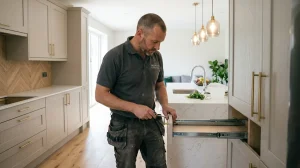
DIY has its place — small fixes, sure. A full kitchen install is a different scale of problem entirely, bigger than most people expect when they start pricing tools online.
Cabinets need spot-on measurements, or nothing lines up the way it should. Plumbing and electrics need to be right first time; there isn’t much room for trial and error there. Even one small slip can throw off how the whole kitchen looks once it’s all fitted.
Installers who’ve done this a hundred times have already seen where these projects tend to go sideways. They catch problems early, before they become expensive ones. Get it right from the start, and repairs down the line tend not to be much of an issue at all.
Kitchen Design Wolverhampton: Why Planning Matters
Kitchens that actually work day to day almost always start with proper planning. There’s no real shortcut around that.
Before anything gets fitted, it’s worth sitting with how the space will actually be used — storage, worktop space, lighting, how people move while cooking. None of it’s as obvious as it sounds, not until you’re stood in the room trying to picture it for real.
Done well, a layout makes cooking less of a chore, and it can make even a cramped kitchen feel a fair bit more open than it really is on paper.
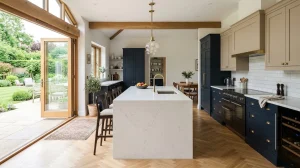
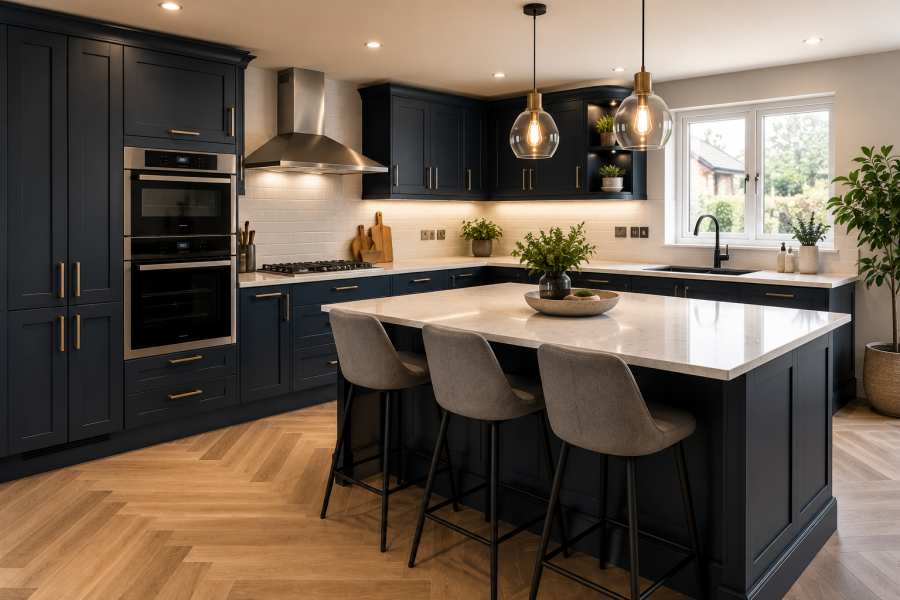
Across Wolverhampton, the requests tend to repeat: kitchen islands, built-in appliances, deep storage drawers, open-plan layouts. Not exactly surprising, but worth knowing what’s popular before you start.
Kitchen Projects in Wolverhampton Homes
Wolverhampton’s housing isn’t uniform, and neither are its kitchens. Older properties usually mean smaller spaces and awkward layouts to design around. Newer builds tend to give a bit more room to work with, generally speaking.
Because of that, kitchen projects rarely follow a template. Available space, where the plumbing already runs, structural quirks hiding in the walls — all of it shapes what the final design can realistically become.
Understanding these details early on saves a fair bit of back-and-forth once work actually starts.
Kitchen Renovation vs Kitchen Refurbishment
People throw these two words around interchangeably. They’re not quite the same thing, though, and the difference matters.
A refurbishment is the lighter touch. New cabinet doors, a worktop swap, better lighting — that kind of update.
A renovation goes further. Cabinets replaced outright, the layout reworked, appliances moved, plumbing and electrics upgraded along with everything else.
Which one fits depends on the state of the current kitchen, and honestly, on what the homeowner is actually after.
Popular Kitchen Styles
Plenty of styles to choose from. The right one usually comes down to taste, and to what the property itself can carry off without looking forced.
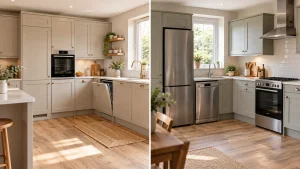
Shaker kitchens have stuck around in the UK for a reason — simple design, genuinely useful storage, and they sit comfortably in a new build just as well as in a period home.
Contemporary kitchens go the other way entirely. Clean lines, modern finishes, handleless cabinets, appliances tucked away out of sight, not much clutter left on show.
Traditional kitchens lean on classic details and warmer tones, usually the better fit for older properties where a sharp modern look can feel out of place.
Kitchen Trends in Wolverhampton
Kitchen trends shift, like they always do, but lately the direction has leaned toward upgrades that make ordinary days easier rather than ones that just photograph well.
Kitchen islands. Smart storage. Integrated appliances. Quartz worktops. Open shelving. Energy-efficient lighting. None of it’s especially new, if we’re honest, but it keeps showing up because it actually works.
How to Choose Kitchen Installers in Wolverhampton
This one’s worth not rushing.
Compare a handful of companies rather than settling on the first quote that lands. Past work tends to say more than any sales pitch ever could. Reviews are worth reading too — they usually surface both the strong points and whatever’s worth being cautious about.
Get a proper written quotation before agreeing to anything. It heads off a lot of confusion later about what was actually meant to be included in the first place.
A bit of extra digging upfront usually pays for itself.
How long does a kitchen installation take?
Most jobs land somewhere around one to three weeks, start to finish. Bigger projects, the ones touching layout or structure, tend to run on longer.
What does the installation actually include?
It’s not just cabinets. Usually worktops, appliances, plumbing, the electrics and lighting all get bundled in too — though exactly what’s covered shifts a bit depending on who you’re working with.
Renovation or refurbishment — which one do I need?
If the bones of the kitchen are fine and it just needs freshening up, go with refurbishment. If you’re moving things around or replacing the layout outright, that’s renovation territory.
Does planning really make that much difference?
It does. Storage, workflow, day-to-day usability — all of it traces back to decisions made before installation even starts. Skip the planning, and it tends to cost more later, not less.
Will a new kitchen actually add value to the property?
A lot of homeowners think so, and fair enough — a kitchen that’s modern and works properly tends to leave a good impression on anyone looking round the house.
Conclusion
A kitchen’s never just somewhere food gets made. For most households, it’s the actual centre of things — probably the most-used room under the roof, if anyone ever bothered to count.
Time spent planning properly shows up in the final result, every time. Layout, storage, the quality of the install itself — each one plays its part, and skipping the planning rarely ends up saving anyone time in the end.
Get it installed well, and a kitchen should feel practical, comfortable and built to last — the sort of room that just keeps working, year after year, without anyone really having to think about it.