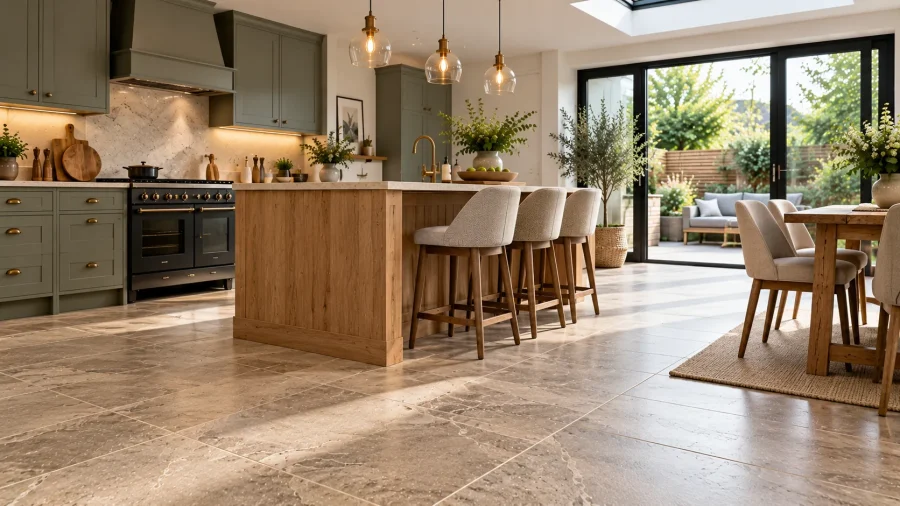
Most people pick a kitchen floor by how it looks in the showroom. Totally understandable. But your kitchen floor has a tough job. It gets walked on all day, splashed every time someone fills the kettle, and mopped more than any other floor in the house.
Porcelain tiles, vinyl and engineered wood are three of the most popular choices, and each one handles that job a bit differently. Which suits you best really depends on how your kitchen gets used, the style you’re after and how much looking after you’re prepared to do.
What Matters When Choosing Kitchen Flooring
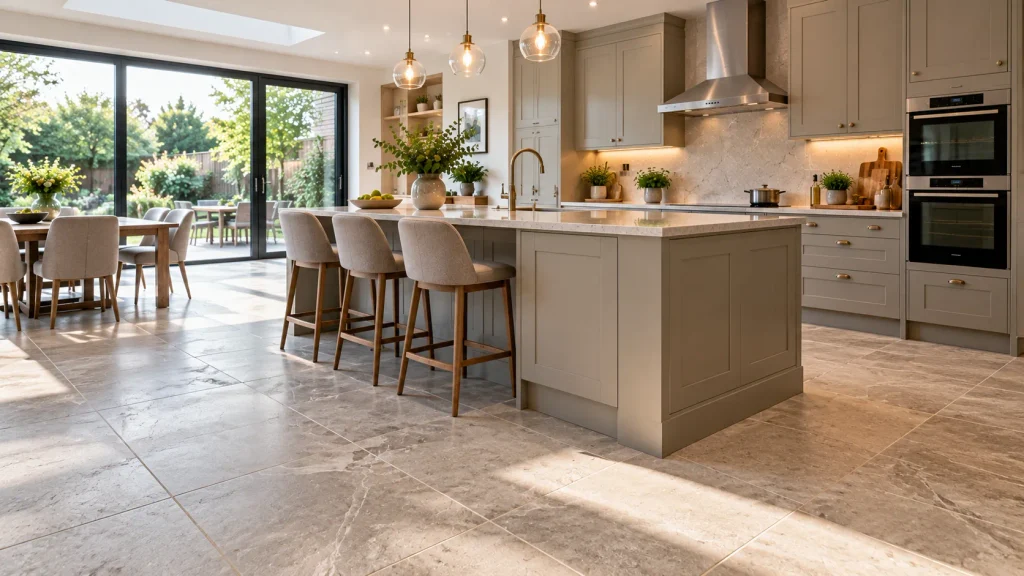
Compared with a bedroom or lounge, a kitchen floor takes a real beating. So before you fall for a particular finish, it’s worth asking yourself three things. How much water is it going to come into contact with? How busy is the room? And how will it feel after you’ve been standing on it for an hour making Sunday dinner?
Water Resistance and Spill Protection
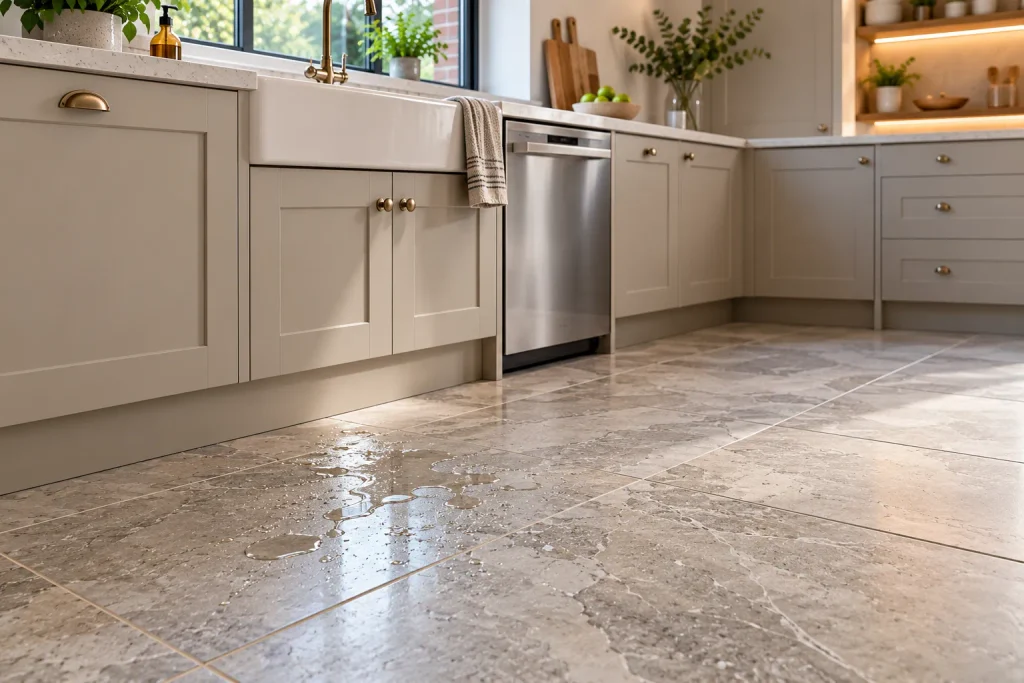
The areas around your sink, dishwasher and hob are where water resistance really counts. Porcelain barely absorbs any water at all. A lot of vinyl copes well with everyday spills too, provided it’s been fitted properly. Engineered wood is the one that needs more caution, since moisture can work its way into the timber and the finish.
One word of warning, though. No floor is completely waterproof in every situation, whatever the packaging says. Have a look at the manufacturer’s specs, especially the bits about joints, edges and fitting.
Durability and Everyday Wear
Family kitchens see a lot of action, from dropped forks to chairs being dragged back from the table. Porcelain shrugs off scratches, although something heavy landing on it can chip a tile. With vinyl, how well it resists scratches and dents varies from one product to the next. Engineered wood will collect marks as the years go by. Some people like that worn-in character. Others find it drives them mad.
Comfort and Cleaning
If you cook a lot, don’t underestimate comfort. Vinyl tends to feel softer and warmer than porcelain, while engineered wood has that lovely natural feel of real timber. None of the three is hard to keep clean, but things like grout and specific care instructions will change what your cleaning routine looks like.
Porcelain Tiles for Kitchen Floors
When easy cleaning and coping with water are your top priorities, porcelain is hard to beat. It comes in stone, concrete and wood-effect designs, so it fits in just as well in a sleek modern kitchen as in a more traditional one.
Advantages of Porcelain Kitchen Tiles
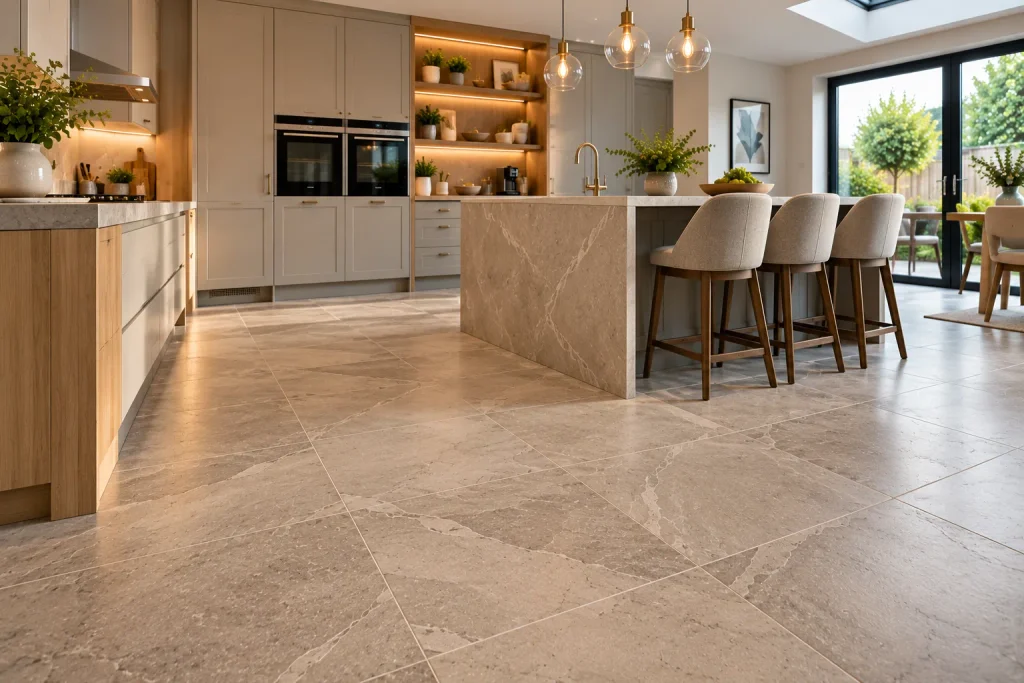
Porcelain is dense, takes on very little water and comes in finishes with different levels of grip. A good quality tile will handle years of heavy use, wipes clean in seconds and holds its colour well if you look after it. The choice of designs is huge as well, with marble and stone effects, and some wood-effect tiles that are surprisingly convincing.
Limitations to Consider
The flip side of all that toughness is that porcelain is hard. Stand on it for a long stretch and your feet will know about it. Drop a glass or plate and it’s likely to shatter. And if something heavy or sharp hits a tile at the wrong angle, it can chip.
Fitting can also take a bit more time and money, as you may need a specialist tiler and some levelling work on the subfloor. Replacing one broken tile is usually possible. Matching it is another matter, so keep a few spares tucked away.
Grout and Long-Term Care
The tiles themselves are easy. The grout is where the effort goes, because it can trap dirt and darken over time. A sensible grout colour and following your installer’s sealing advice will make a big difference. Day to day, a sweep or vacuum followed by a suitable cleaner is all it needs. Just avoid scouring pads and harsh chemicals.
Vinyl Flooring for Kitchens
If you want something practical that’s a bit kinder on your feet, vinyl is worth a serious look. You’ll find loads of wood and stone-effect designs, and it comes as sheets, tiles or planks. Quality varies a lot, though, so it pays to read the spec as carefully as you look at the pattern.
Luxury Vinyl Tiles and Planks vs Sheet Vinyl
Sheet vinyl is laid from big rolls, which means fewer seams across the floor. Luxury vinyl tiles (LVT) and planks (LVP) are laid piece by piece, giving you more freedom with patterns and usually a more realistic finish. Whichever you choose, the joints need fitting properly, particularly in the spots that get splashed most.
Benefits and Drawbacks
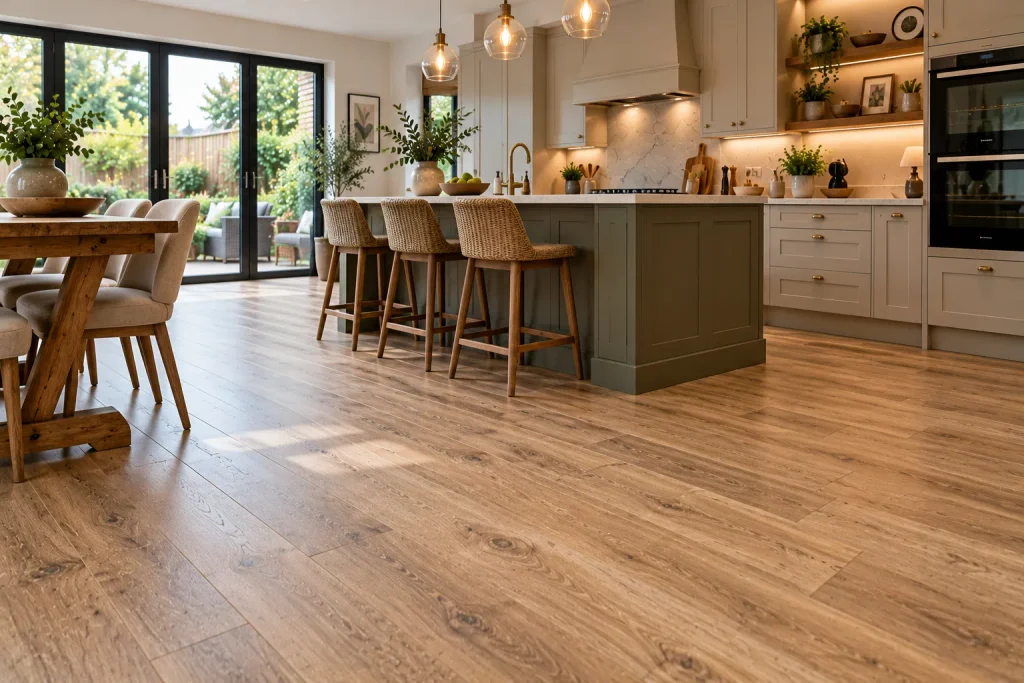
Vinyl is warmer and softer underfoot than porcelain, comes in all sorts of styles and deals with day-to-day spills without any fuss. Some types are glued down, while others just click together.
It’s not indestructible, though. Sharp objects and heavy furniture can scratch or dent it, and direct heat or the wrong cleaning products can damage the surface. Cheaper vinyl tends to show wear sooner, so look at the wear layer, the warranty and whether it’s actually meant for kitchens.
Water Resistance and Repair
Here’s something people often miss. A water-resistant surface doesn’t mean the whole fitted floor is waterproof. Water can still sneak in at the joints and edges, depending on the product and how well it’s been laid. Wipe up spills quickly and stick to the cleaners the manufacturer recommends. On some click systems you can swap out a single damaged plank, but repairs on sheet vinyl are much harder to hide.
Engineered Wood Flooring in Kitchens
For a lot of people, nothing beats the warmth of real wood. Engineered wood gives you exactly that, and its layered construction makes it more stable than solid timber. It’s still wood, though, so you need to take kitchen moisture seriously.
How Engineered Wood Works in a Kitchen
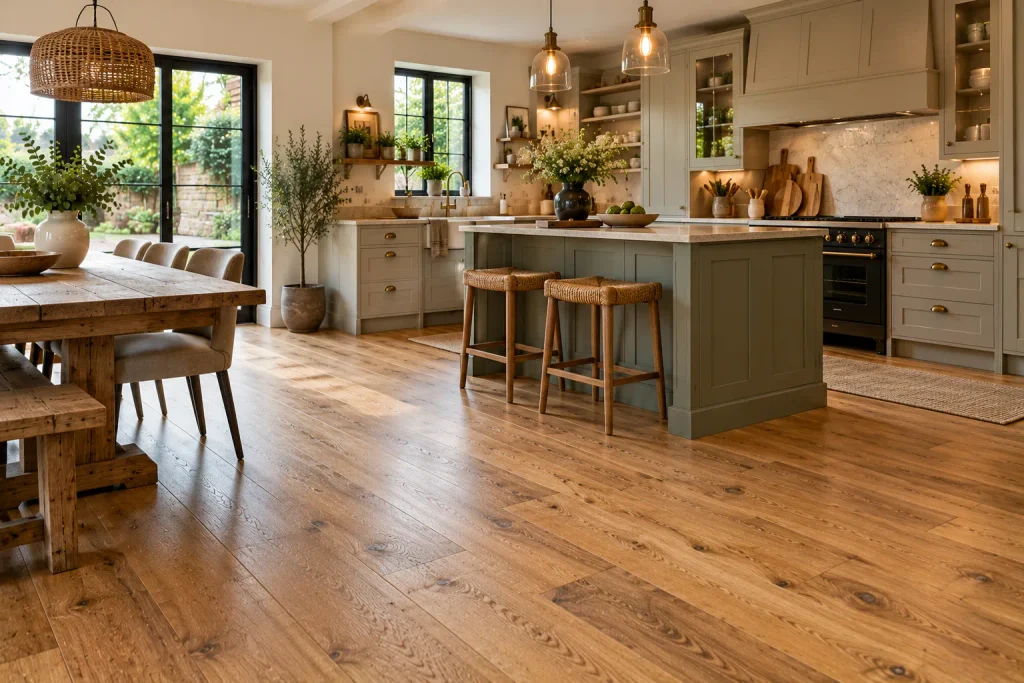
Each board usually has a real wood top layer bonded onto a multi-layer core. That build helps it handle changes in temperature and humidity better than solid wood would. It isn’t fully waterproof, however, and whether a particular product is suitable for a kitchen depends on how it’s made, its finish, how it’s fitted and what the manufacturer says.
Moisture Risks and Maintenance
Leave water sitting on engineered wood and it can damage the finish, seep into the joints or cause the boards to swell. A slow leak under the sink or behind the dishwasher is the real enemy here, so deal with any drips straight away. Mop up spills as soon as they happen, use only recommended products, and go easy on the water when cleaning.
Finish and Long-Term Appearance
There’s plenty of choice in wood species, colours, board widths and finishes, and because it’s real timber, no two boards are identical. How thick the top layer is will decide whether the floor can be sanded and refinished down the line, so check that before you buy rather than assuming it can.
Porcelain Tiles vs Vinyl vs Wood: Which Is Best?
Honestly, there isn’t one right answer for every kitchen. It’s more about which trade-offs you’re happy to live with. Here’s how they compare side by side.
| Feature | aPorcelain tiles | Vinyl flooring | Engineered wood |
| Water resistance | Excellent on the tile surface | Often very good; depends on product and joints | More vulnerable to moisture |
| Durability | Very hard-wearing; can chip | Depends on wear layer and quality | Can mark over time |
| Comfort underfoot | Hard and often cold | Usually softer and warmer | Natural timber feel |
| Cleaning | Easy; grout needs attention | Usually simple | Needs careful moisture control |
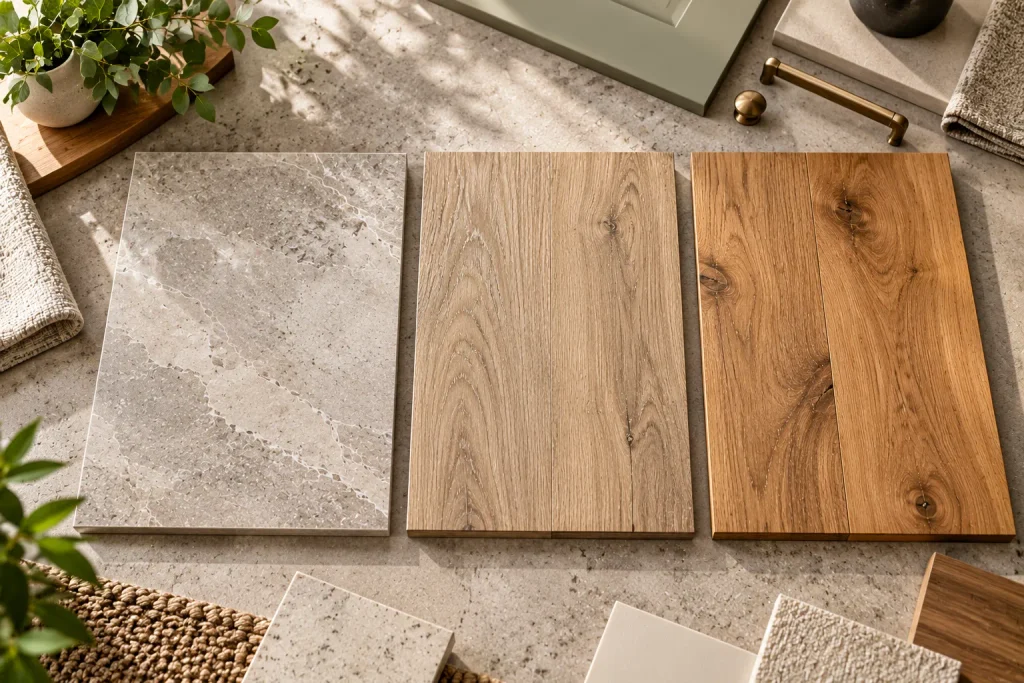
| Appearance | Stone, concrete and wood effects | Huge range of designs | Genuine wood surface |
| Relative cost | Varies; fitting can add cost | Often cheaper, depending on product | Often higher material cost |
Best for Busy Family Kitchens
If your kitchen is the hub of a busy household and you want something that’ll take a pounding and wipe clean, porcelain is a strong contender. Vinyl is a good shout too, particularly if comfort is high on your list.
Best for Comfort and Easy Upkeep
For a floor that’s warm and soft underfoot, vinyl usually comes out on top. Porcelain is just as easy to clean, apart from the grout. Engineered wood is fine with a sensible routine, as long as you’re careful with water.
Best for a Natural Wood Look
If it has to be real wood, engineered wood is the obvious choice. But if you love the look and you’re worried about spills, wood-effect porcelain or vinyl can get you surprisingly close.
Kitchen Flooring Costs and Installation
It’s easy to focus on the price per square metre and forget everything else. Prep work, fitting, trims and changes in floor height can all add up, so look at the cost of the whole job.
Material and Installation Costs
Vinyl is often the cheapest of the three, though premium LVT can cost more than basic sheet vinyl. Porcelain prices depend on tile size and quality, and engineered wood varies with the type of timber, the top-layer thickness and how the boards are made. Large tiles may need a specialist to fit them, and every floor should be laid using the method the product specifies.
Subfloor Preparation and Floor Height
Whatever you choose, an uneven subfloor will spoil it. Porcelain needs a solid base, vinyl can show every bump underneath it, and engineered wood needs proper support and the right moisture levels.
Think about where the new floor meets the hallway or next room, and about skirting and thresholds too. Raise the floor height even slightly and you might find a door catching, or the dishwasher no longer sliding back in.
Kitchen Flooring Mistakes to Avoid
The most common mistake is choosing purely on looks and forgetting about water, wear and cleaning. A close second is assuming that every vinyl floor is waterproof, when in reality it depends on the product and how it’s fitted. People also pick wood without thinking about the sink and dishwasher, or skip proper subfloor prep to save money and regret it later.
Don’t forget to check door and appliance clearances before the floor goes down. And when you’re comparing quotes, make sure you’re comparing the full cost, including prep, fitting and finishing, not just the materials.
Conclusion
The right kitchen flooring is really about finding the balance that suits you. Porcelain is tough and easy to clean, vinyl is comfortable with plenty of design choice, and engineered wood brings genuine timber character, as long as you’re happy to be a little more careful around water.
Before you make up your mind, weigh up the specs, the fitting and the upkeep against how your kitchen actually gets used day to day. Get that right, and you’ll have a floor you’re happy with for years.