Nobody plans a dream kitchen around the bin. It’s usually the last thing anyone thinks about, somewhere after the tap and just before the kickboards. Then the kitchen’s finished and you realise the only place left for rubbish is a pedal bin wedged in the corner, with the recycling piling up in carrier bags next to it.
A badly placed bin gets in the way while you’re cooking, eats up cupboard space and makes sorting your recycling a chore. Built-in bins hide all that away while keeping it within easy reach. Whether you go for a simple pull-out or a multi-compartment recycling unit, the right setup depends on your cabinet space, how your household works and what your local council collects.
Why Should You Plan Built-In Kitchen Bins Before Installing Cabinets?
A built-in bin needs the right spot and enough room to work properly. Sort it out before the cabinets go in and you can make sure it actually fits the layout.
Planning early means your rubbish and recycling each get a proper home, instead of separate bins dotted around the room. You can put the bin right where you need it while you’re cooking, without giving up important storage elsewhere. Everything stays out of sight when you’re not using it, so the kitchen looks tidier. And checking measurements beforehand helps you avoid clashes with plumbing, drawers and other fittings.
It also makes it much easier to tie the bin system in with the cabinets around it.
What Are the Different Types of Built-In Kitchen Bins?
There’s a fair bit of choice, from a single hidden bin to large units with separate recycling sections.
Pull-Out Kitchen Bins
These sit inside a cabinet and slide out on runners when you need them.
Some are fixed to the cabinet door, so they come out when you open it. Others have their own pull-out frame. You can get them with one container or several, depending on the model.
They’re a great option if you want your bins hidden away but still easy to get to while you’re cooking and cleaning.
Integrated Kitchen Bins
Integrated bins are built in as part of your cabinets, either inside a dedicated unit or attached to a door, depending on the system.
Because they live inside the cabinetry, your floor and worktops stay clear, which gives the whole kitchen a cleaner look. Check the fitting requirements carefully, though, as different systems are designed for different types of cabinet.
Under-Sink Kitchen Bins
The cupboard under the sink is a popular spot for rubbish because it’s right next to where you wash up.
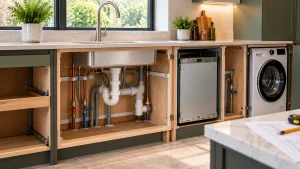
The catch is that it’s also where the waste trap, water pipes and isolation valves live and they can take up a surprising amount of room.
Before choosing an under-sink bin, measure the inside of the cupboard and make sure the bin won’t block the pipes or stop you getting to important fittings.
Double and Multi-Compartment Kitchen Bins
These let you split different types of rubbish within one cabinet. You might have one section for general waste and another for recycling. Bigger systems can have extra containers for different recyclables or food waste.
How many compartments you need really depends on what your household throws away and what your local council collects.
How Much Cabinet Space Do Built-In Kitchen Bins Need?
That depends on the bin system, how many containers it has and the cabinet it’s going into. Measure the whole setup, not just the bins themselves.
Measuring Cabinet Width, Height and Depth
Start with the cabinet opening and the space inside. You’ll want the internal width, height and depth, along with the position of any shelves or support panels and the space taken up by hinges and other fittings. Compare all of that with the manufacturer’s specs before choosing a system.
Checking Internal Space and Obstructions
Plumbing, panels and fittings can all eat into the space inside a cabinet. This matters most under the sink. A bin can look like it’ll fit based on the outside of the cupboard, then turn out to be useless once the waste trap and pipes are in the way.
Allowing Room for Pull-Out Mechanisms
Pull-out systems need room to slide forward without catching on anything nearby. Check how the mechanism works, whether it needs extra space when fully pulled out and whether the cabinet door has to open to a particular angle.
Checking Door and Drawer Clearance
Your bin shouldn’t get in the way of nearby drawers, doors or appliances. Think about how it moves when it opens and whether it’ll block a walkway or someone else working in the kitchen.
Reviewing Bin Dimensions Before Ordering Cabinets
If you’ve already picked a bin system, give its technical specs to your kitchen designer. Then the cabinet can be planned around the real product, not a rough guess.
How Should You Plan Waste and Recycling Separation?
The whole point of a multi-compartment bin is to make sorting your rubbish part of everyday life. The right setup depends on what your household throws away and what your council collects.
Separate General Waste and Recycling
Think about the kind of rubbish you produce most. Depending on your local collections, you might want separate containers for general waste and for recyclables like paper, cardboard, plastic packaging, tins and glass. Sorting it as you go saves you doing it later.
Choose the Right Number of Compartments
For a small household with limited space, one large bin may be enough. If you separate several types of rubbish, a double or multi-compartment system will probably suit you better.
Don’t go overboard, though. More compartments means smaller containers and smaller containers need emptying more often.
Consider Food Waste Storage
Food waste deserves its own thought. A separate caddy makes it easy to scrape in peelings and leftovers while you’re cooking.
Check what your local council accepts for food waste and how they want it stored. If you include a food waste compartment, make sure it lifts out and cleans easily.
Where Is the Best Place to Position Kitchen Bins?
Usually, the best spot is somewhere that’s handy when you need it but doesn’t get in the way. Think about how you prepare food, wash up and move around the room.
Inside a Cabinet Near the Sink
Near the sink makes sense, since that’s where you scrape plates and rinse out tins and jars before recycling them. Just check the space carefully if the cabinet also holds the plumbing.
Near the Main Food Preparation Area
Having the bin close to your main prep worktop means you can get rid of packaging and peelings without walking across the kitchen. In a busy household with several people cooking, that can make a real difference.
Inside a Dedicated Pull-Out Cabinet
If the under-sink cupboard is too cramped, a separate base unit can be a better home for your bins. A dedicated pull-out can hold several containers, gives you more freedom over their size and layout and doesn’t have to compete with the pipes.
Away from Areas Where They Could Obstruct Movement
Look at the layout around the bin too. When it’s pulled out, it shouldn’t block the main walkway or get in the way of nearby appliances. You need enough room to open it comfortably, even when someone else is in the kitchen.
What Should You Consider Before Choosing Pull-Out Kitchen Bins?
There are lots of sizes and designs out there, so don’t just choose on looks.
Bin Capacity and Household Size
How much rubbish does your household get through and how often do you want to empty it? Bigger households may need more capacity or extra compartments, while a smaller one might be fine with something compact.
Number of Compartments
Pick a setup that matches what you need to separate. Two containers may be enough for general waste and recycling. If you sort several types of recycling, a multi-compartment system might suit you better.
Pull-Out Mechanism and Ease of Access
Check how smoothly it slides in and out, as you’ll be using it several times a day. Some pull out by hand, while others are linked to the cabinet door. Make sure the one you choose suits your cabinet design.
Ease of Removing and Cleaning Containers
Containers you can lift out make emptying and cleaning a lot easier. Check whether each one comes out on its own and whether the shape lets you get inside to clean it properly.
Cabinet Door and Fixing Compatibility
Not every pull-out system fits every cabinet. Some are made for certain cabinet widths, door types or fixing positions. Read the manufacturer’s fitting instructions and confirm it’ll work before ordering.
Space Required for the Complete System
The frame, runners and containers all take up room. Check the full dimensions and allow for the space needed when it’s fully pulled out, especially if it’s going under a sink or next to a dishwasher.
How Can You Keep Built-In Kitchen Bins Clean and Odour-Free?
Hiding your bins away makes the kitchen look tidier, but they still need looking after. Food scraps, drips and sticky packaging can soon start to smell if they’re left too long.
Emptying Waste Regularly
Don’t let rubbish or food waste build up. How often you empty it depends on your household and what’s in there, but food waste usually needs more attention, especially when the weather’s warm.
Cleaning Removable Containers
Every so often, take the containers out and give them a clean, following the manufacturer’s instructions. Make sure they’re dry before you put them back, as damp is a quick route to bad smells.
Keeping Food Waste Separate
Keeping food waste away from general rubbish makes the whole thing easier to manage. Use a proper caddy, follow your council’s guidance and empty and clean it regularly, especially if it’s holding wet or smelly scraps.
Using Suitable Liners Where Appropriate
Some bins are made to use liners, while others come with specific advice. Check the instructions first. The right size liner stops it slipping down, hanging over the edge or making a mess.
Allowing the Bin Area to Dry After Cleaning
Moisture in the cabinet can lead to smells. After cleaning the containers or wiping down the cupboard, let it dry before closing it up. Keep an eye out for spills around the base and in the runners as well.
Common Built-In Kitchen Bin Planning Mistakes to Avoid
The most common one is picking a bin before checking the cabinet size, only to find it doesn’t fit the opening or the space inside. Close behind is forgetting about the plumbing under the sink, which can leave far less room than expected.
People also go too small and end up emptying the bin twice a day, or forget to leave enough room for it to pull out without hitting something. Some don’t think about what their council collects, so the compartments don’t match their recycling. Others put the bin too far from where they actually prep food. And it’s easy to overlook cleaning, so containers that are awkward to remove end up getting ignored.
Go through these points before ordering your cabinets and you’ll end up with a bin system that works with your finished kitchen rather than against it.
Are Built-In Kitchen Bins Better Than Freestanding Bins?
Built-in bins keep things tidier because they’re hidden inside your cabinets. They also make good use of cupboard space and let you separate rubbish into different compartments. Freestanding bins give you more flexibility if you’d rather not give up a whole cabinet to waste.
What Size Kitchen Bin Fits Inside a Standard Cabinet?
There’s no one size that fits every cabinet. It depends on the internal width, height and depth, plus any pipes or fittings inside. Always check the bin system’s installation specs before you buy.
Are Pull-Out Kitchen Bins Worth It?
They can be, if you want your bins out of sight but still easy to reach. They’re especially handy near the sink or your main prep area. Whether they’re right for you depends on your cabinet space, the capacity you need and how good the mechanism is.
Can You Install Kitchen Bins Under the Sink?
Yes, some systems are made for under-sink cupboards. The space can be tight because of the waste trap, pipes and other fittings, though. Measure carefully and choose a system that still lets you get to the plumbing.
How Many Compartments Should a Kitchen Recycling Bin Have?
That depends on how your household recycles and what your local council collects. Two compartments may be enough for general waste and recycling, while households sorting more materials might want extra.
Where Should a Kitchen Bin Be Positioned?
Usually near the sink or your main prep area, so it’s easy to get rid of scraps and packaging while you cook. Just make sure it doesn’t block walkways, cabinet doors or nearby appliances.