Ask anyone what they’d change about their old kitchen and the sink comes up a lot. Too shallow. Too small for the roasting tin. A rim that collects gunk. A double bowl that looked smart in the showroom but turned out to be two bowls that are each slightly too small for anything.
It’s an easy thing to get wrong, mostly because people choose it last, after the units and worktops are already decided. This guide covers the main sink types, bowl setups, materials and sizes, so you can choose one that actually suits the wa,y you cook and clean.
What Should You Consider Before Choosing a Kitchen Sink?
Forget styles for a minute. Start with how your kitchen gets used.
Kitchen layout and available worktop space
Where’s the sink going, and how much room is around it? A wide double-bowl unit looks great in a big kitchen. Put the same sink in a compact galley and you’ve just lost the only decent stretch of prep space you had.
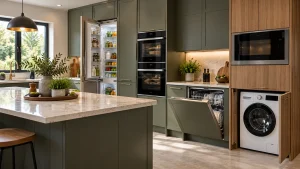
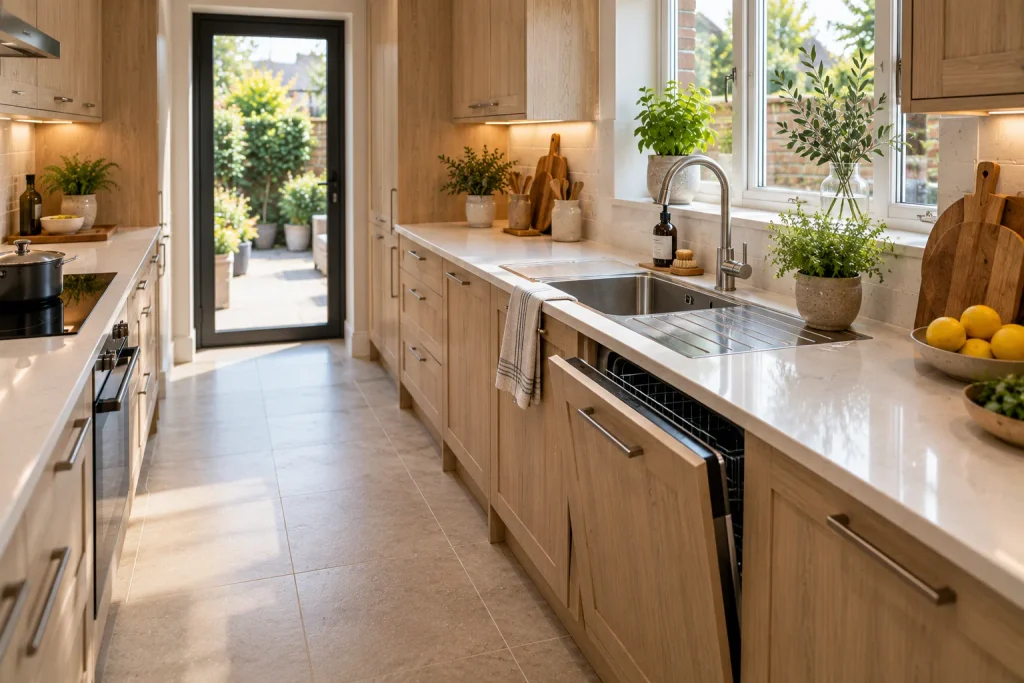
The dishwasher matters too. Ideally it sits right beside the sink, so dirty plates go from rinse to rack without dripping across the floor. Plan the tap and the washing machine (if it’s in the kitchen) at the same time.
Household size and everyday washing needs
A family of five generates a different amount of washing-up than one person living alone. Bigger households often get on better with a larger bowl or two bowls. Smaller ones rarely need more than a single.
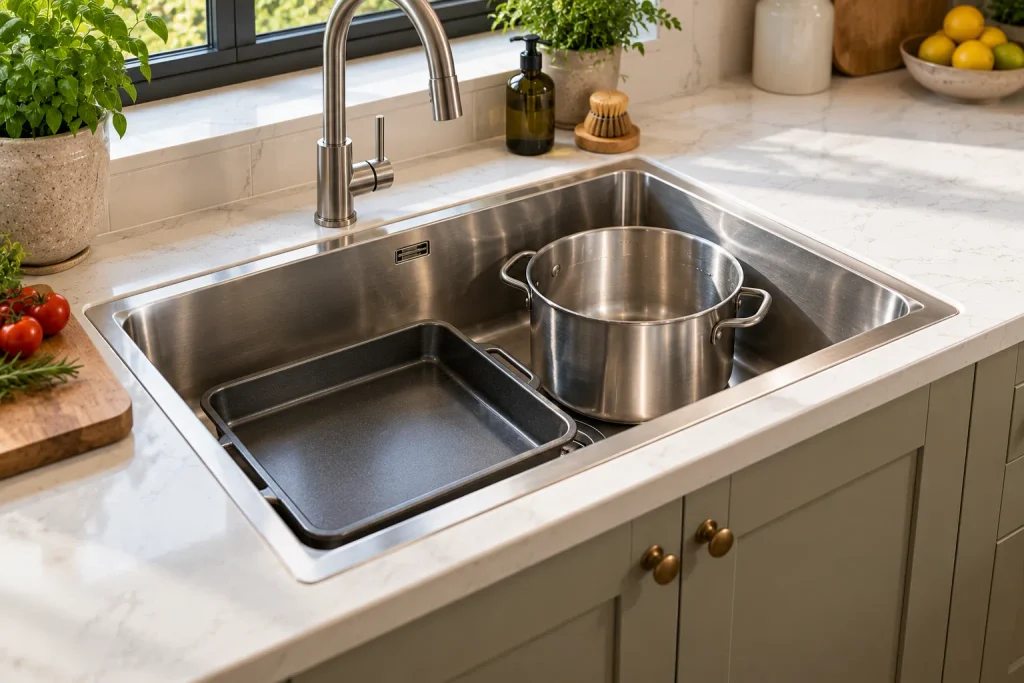
The real test, though, is your biggest pan. If the baking tray or stockpot won’t sit flat in the bowl, you’ll be annoyed about it every week.
Budget, durability and maintenance
The price on the sink isn’t the whole cost. You’ll need a compatible tap and waste, and possibly some plumbing changes if the sink is moving.
Then there’s cleaning. Stainless steel is about as low-effort as it gets. Ceramic and composite can be just as easy, but each finish has its own care rules, so read what the manufacturer says before you buy.
What Are the Different Types of Kitchen Sinks?
How a sink is fitted changes how it looks and how easy it is to keep clean. There are four main ways to do it.
Inset Kitchen Sinks
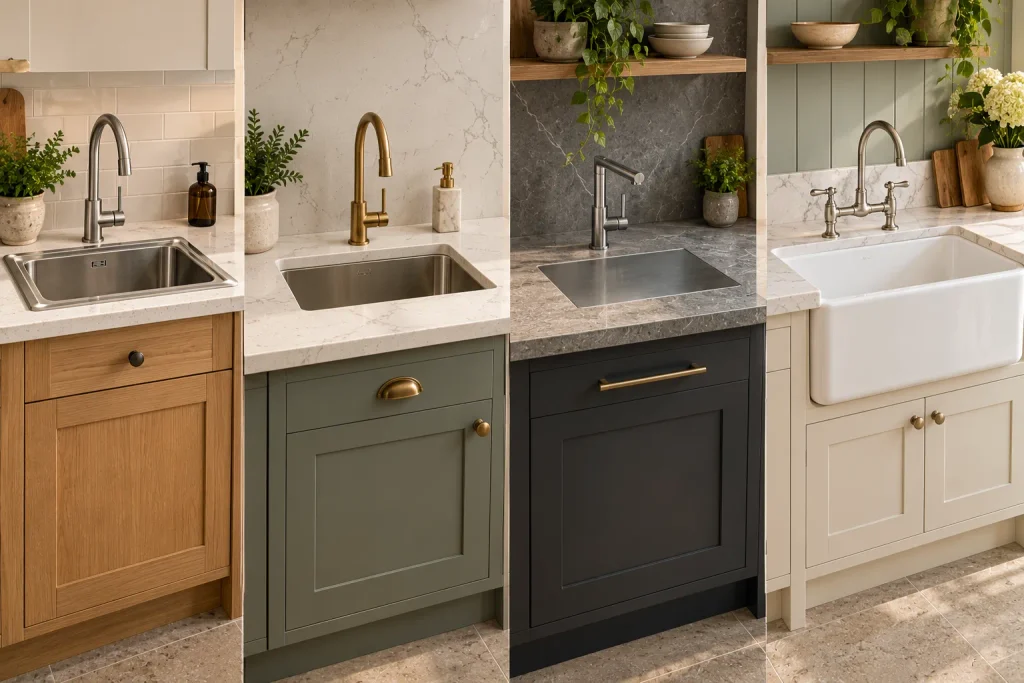
Also called drop-in or top-mount sinks. A hole is cut in the worktop, the sink drops in, and its rim rests on top of the surface.
This is the most flexible option going. Inset sinks come in every size and material you can think of, and they’re usually fine with laminate worktops (check the manufacturer’s fitting instructions first).
The trade-off is that rim. Crumbs and water love to sit along it, so you’ll be running a cloth around the edge more often than you’d like.
Undermount Kitchen Sinks
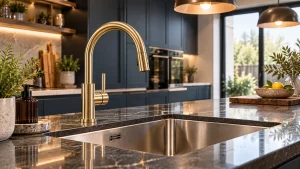
Here the sink is fixed underneath the worktop, so the worktop edge forms a neat border around the opening. No rim at all.
Apart from looking tidy, it’s genuinely practical. You can sweep onion skins and spilt rice straight off the worktop into the bowl.
You do need the right worktop for it, usually something solid like quartz or granite, and it needs to be professionally fitted so the sink is properly supported and sealed underneath.
Belfast and Butler Kitchen Sinks
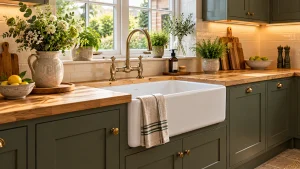
These are the big, deep, rectangular ceramic sinks you see in farmhouse and Shaker kitchens. Great for soaking a casserole dish or washing muddy boots, if we’re honest.
What’s the difference between them? Traditionally, a Belfast sink has an overflow and a Butler sink doesn’t. Modern versions don’t always follow that rule, so check the spec of the one you like.
Be aware they’re heavy. The base unit has to be built to take the weight, and the worktop needs planning around the sink, so involve your installer early.
Flush-Mounted Kitchen Sinks
A flush-mounted sink sits exactly level with the worktop. Run your hand across and you’d barely feel where one stops and the other starts.
It looks very modern and makes wiping down easy. But it’s the fussiest of the four to fit, as the worktop has to be cut and prepared precisely, and the sink must be designed for flush mounting. Talk to your supplier or installer before falling for this one.
Single Bowl vs Double Bowl Kitchen Sink: Which Is Better?
Honestly? Neither, automatically. It depends on how much washing up you do by hand.
Single bowl kitchen sinks
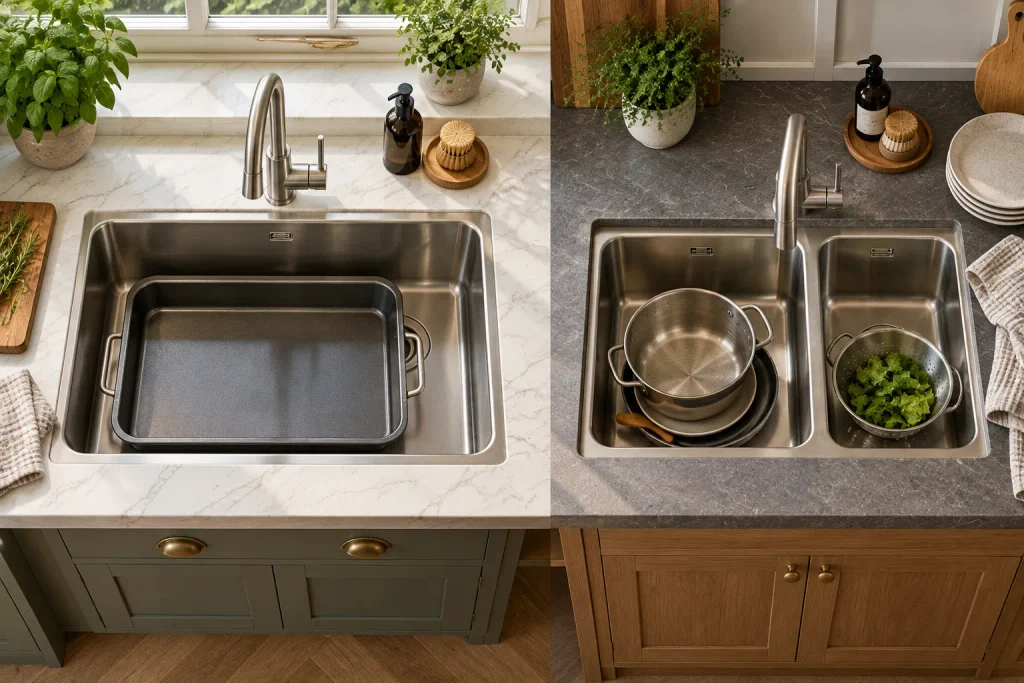
One big bowl, no divider. Oven trays fit. Large pans fit. It also takes up less width, which helps a lot in smaller kitchens.
If your dishwasher handles most of the work, a single bowl is often all you’ll ever need.
Double bowl kitchen sinks
Two separate bowls, either matching or one large and one small. The appeal is being able to do two jobs at once: washing up in one, rinsing salad or draining pasta in the other.
The downside is that the divider steals space from both bowls. Bulky cookware can end up balanced awkwardly across the middle.
Which option should you choose?
Lots of big pans and limited space? Go single. Prefer keeping washing, rinsing and prep separate? A double makes sense. Just don’t choose based on which one looks fancier in the brochure.
Which Kitchen Sink Material Should You Choose?
Stainless Steel Kitchen Sinks
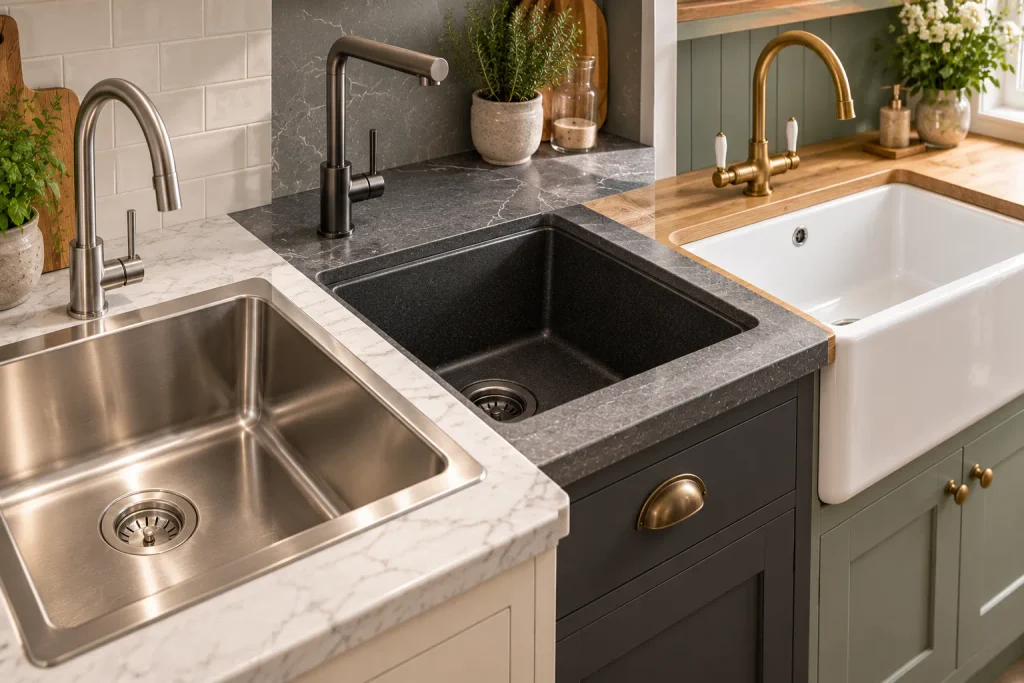
There’s a reason stainless steel is everywhere. It’s light, tough, easy to clean, and comes in more bowl shapes and finishes than any other material. Good quality steel won’t rust or corrode, and it works in modern and traditional kitchens alike.
It isn’t perfect. Polished finishes show water spots and fingerprints. Fine scratches will appear with use (most people stop noticing them after a while). And cheap, thin steel can be surprisingly noisy when the tap’s running full blast.
For a sensible, do-everything sink, it’s hard to beat.
Composite Kitchen Sinks
Composite sinks are made from a blend of materials, usually crushed stone mixed with resin. Granite composite is the version you’ll hear about most.
Colour is the big draw. Black, grey, white, beige, so you can match the worktop or deliberately contrast with it. They also have a reassuringly solid, chunky look that suits a lot of contemporary kitchens, and they handle everyday wear well when looked after.
How tough they are depends heavily on the brand and the mix used. Some finishes show limescale, especially in hard water areas, and harsh cleaners or a heavy pan dropped from a height can mark the surface.
Ceramic Kitchen Sinks
Ceramic has a smooth, glossy glaze and a classic look that sits naturally in country, farmhouse and Shaker kitchens. The glaze doesn’t absorb liquids, so most everyday stains wipe away easily, though you’ll still want to stay on top of limescale.
Two things to plan for. First, weight, as ceramic sinks are heavy and the cabinet below may need extra support. Second, chips. Drop a cast-iron pan on the edge and the glaze can crack. Some stubborn marks also need specific cleaning products, so don’t reach for anything abrasive.
If you want the sink to be a feature rather than just a fixture, ceramic is the way to go.
How to Choose the Right Kitchen Sink Size
Too big and your worktop shrinks. Too small and washing up turns into a juggling act.
Check your base cabinet dimensions
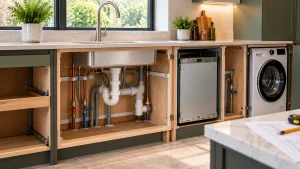
Measure the cabinet the sink will sit in, then check the manufacturer’s minimum cabinet width for the model you’re considering. Remember the inside of that cabinet also has to fit the waste pipes, plumbing and anything else you planned to keep under there.
Measure the available worktop area
You need room for the sink cut-out, the tap, and a sensible amount of worktop either side. With undermount and flush-mounted sinks, the worktop material and fitting method affect the measurements too, so get these confirmed by whoever’s making the worktop.
Consider bowl depth
Deep bowls swallow big pans easily, but you may find yourself leaning over further than is comfortable. Shallower bowls are kinder on your back and less roomy. Go with whatever matches the washing you actually do most.
Is a Kitchen Sink with a Drainer Worth Choosing?
A drainer is that ridge or grooved area next to the bowl where washed things sit and drip.
Integrated drainer vs separate drainer
A built-in drainer is part of the sink itself. If you hand-wash a lot, it’s very handy, as wet pans have somewhere to go that isn’t a tea towel on the worktop.
A separate drying rack does the same job but can be moved or put away. The catch is that it still takes worktop space while it’s out, and it needs a home when it isn’t.
Reversible drainer options
Some sinks can be fitted with the drainer on either side. That helps when the tap or dishwasher position pushes you one way. Not every sink that looks symmetrical is actually reversible, though, so double-check.
When does a drainer-free design make sense?
If the dishwasher does nearly all your washing, a drainer can feel like wasted worktop. Skipping it gives you more prep space, which in a small kitchen can make a real difference.
How to Choose the Best Kitchen Sink for Your Home
For small kitchens
A compact single bowl gives you proper washing space without swallowing the worktop. Inset designs can help here too, especially if your worktop material or budget limits your options.
For busy family kitchens
Either a large single bowl for the big stuff, or a double bowl so washing and rinsing can happen side by side. Choose a hard-wearing material that suits how your household cleans.
For modern kitchens
Undermount or flush-mounted sinks with a solid worktop give that clean, seamless finish. Stainless steel or a dark composite usually looks right.
For traditional kitchens
Belfast or Butler, without question. They suit Shaker and farmhouse units beautifully and the deep bowl is genuinely useful, provided the cabinet’s built to carry it.
Which kitchen sink material lasts the longest?
There’s no single winner. A well-made stainless steel, composite or ceramic sink can last many years if it’s fitted properly and looked after. Quality matters more than the material.
Are composite sinks better than stainless steel?
They’re different rather than better. Composite gives you colour and a solid feel, while stainless steel is lighter, more versatile and very easy to maintain. Let your kitchen design and daily use decide.
Is an undermount sink better than an inset sink?
Undermount looks sleeker and makes wiping crumbs away easier. Inset works with more worktop types and is usually simpler to fit. It mostly depends on what worktop you’ve chosen.
What is the best size for a kitchen sink?
The one that fits your base cabinet, leaves enough worktop and suits how much you wash by hand. Measure first, and check the manufacturer’s minimum cabinet width before ordering.
Should I choose a single or double bowl sink?
Single if you want maximum room for big pans. Double if you like separating washing and rinsing. Your routine should make the call.