Picking an extractor fan isn’t just about finding one that matches your cabinets. Where your hob sits, how you cook, whether air can be sent outside and how much room you’ve got all play a part. Work these out before you order your kitchen and you’ll save yourself a lot of redesigning later.

What Does a Kitchen Extractor Fan Do?
Every time you cook, moisture, grease, heat and smells go up into the air. Without decent ventilation, they settle on your surfaces, fog up windows and drift into the rest of the house.
An extractor pulls that air away from the hob. What happens to it next depends on the type of system you’ve got, which is why it’s worth knowing what an extractor can and can’t do.
Cooking Fumes, Grease and Odours

Frying, grilling and high-heat cooking send tiny grease particles and smells into the air. The extractor draws them into its filters before they spread around the room. How well it does this depends on the hood’s design, power and position. If it sits properly over the cooking area, it catches fumes before they drift off.
Moisture and Condensation
Boiling pasta or steaming veg puts a lot of moisture into the air. If it stays indoors, it ends up as condensation on cold surfaces and over time that can lead to dampness.
A hood that vents outside gets rid of some of that moisture. A recirculating hood doesn’t. It filters the air and sends it straight back into the room, steam and all.
Extraction vs General Ventilation
An extractor deals with cooking fumes right at the source. General ventilation keeps the air fresh throughout the whole house. They’re related, but one doesn’t replace the other, so your cooker hood should be part of a wider ventilation plan rather than the only thing doing the job.
Types of Kitchen Extractor Fans
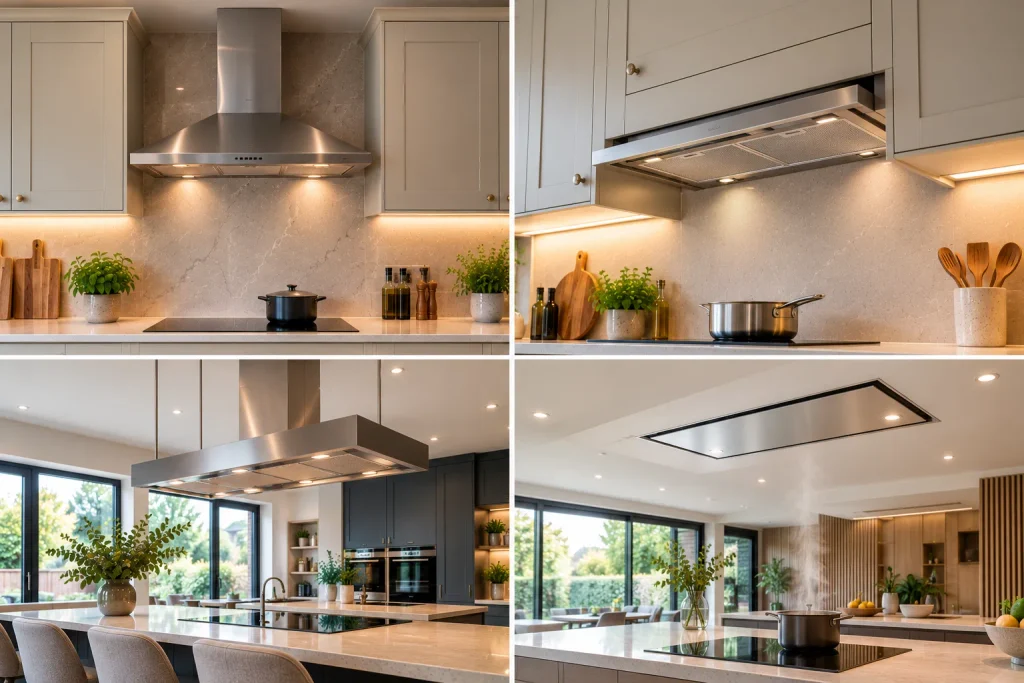
The style of hood you choose affects how it fits in, how much it stands out and how much space it needs. The right one depends on where your hob is, your cabinets, your ceiling height and the look you’re after.
Wall-Mounted Cooker Hoods
These sit above a hob that’s against a wall. You can get chimney, angled and box styles, so there’s something for both modern and traditional kitchens. Since the hood is on show, think about its width, finish and how it sits next to your wall units. Check the manufacturer’s recommended height and clearances too.
Integrated Cooker Hoods
Integrated hoods are built into a cabinet, so they’re much more discreet. Some are hidden completely, while others have a pull-out section you slide forward when cooking. They’re great if you want clean, unbroken cabinetry. Just make sure the model fits the cabinet and there’s still room for the parts and any ducting.
Island Cooker Hoods
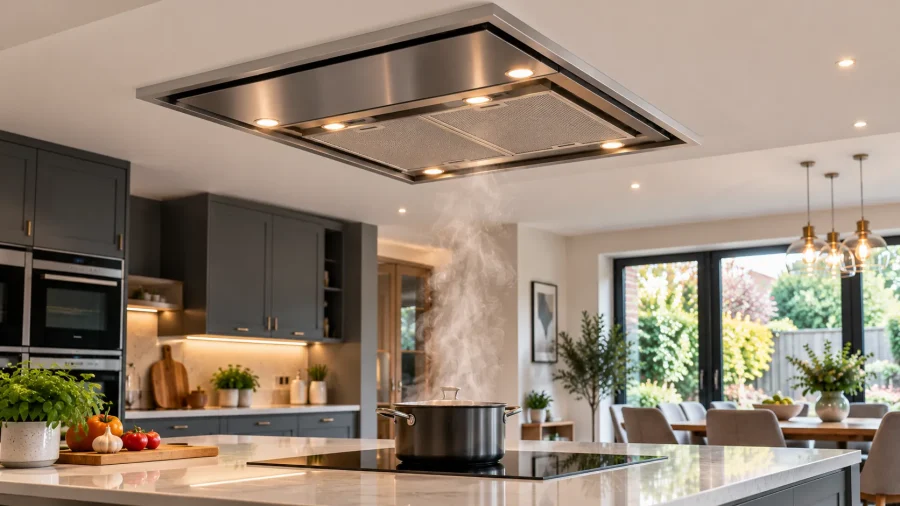
If your hob’s on an island, the hood hangs above it, right in the middle of the room. In an open-plan space, it’ll be seen from almost everywhere, so its size and finish really matter. Check your ceiling height and whether there’s enough structural support and settle the hob position early so the hood can be planned with the rest of the island.
Ceiling-Mounted and Downdraft Extractors
Ceiling extractors sit flush or near-flush above the cooking area. They’re a good option when a big hanging hood would block the view across the room. Whether they’ll work for you depends on your ceiling and the model’s performance.
Downdraft extractors work the other way round, pulling fumes down or sideways through a unit right next to the hob. Some pop up from the worktop when you need them and others are built into the hob itself. Both types need careful planning around the space under the worktop or inside the ceiling, so check the specs before committing.
Ducted vs Recirculating Cooker Hoods
Two hoods can look almost identical and still deal with air in completely different ways. This affects moisture removal, where the hood can go and what maintenance it needs.
How Ducted Cooker Hoods Work
A ducted hood pulls air through its filters and pushes it outside through a duct. The big advantage is that it gets rid of moisture as well as grease and smells. The catch is that it needs a suitable route to the outside and the ductwork has to match the appliance’s specs.
How Recirculating Cooker Hoods Work
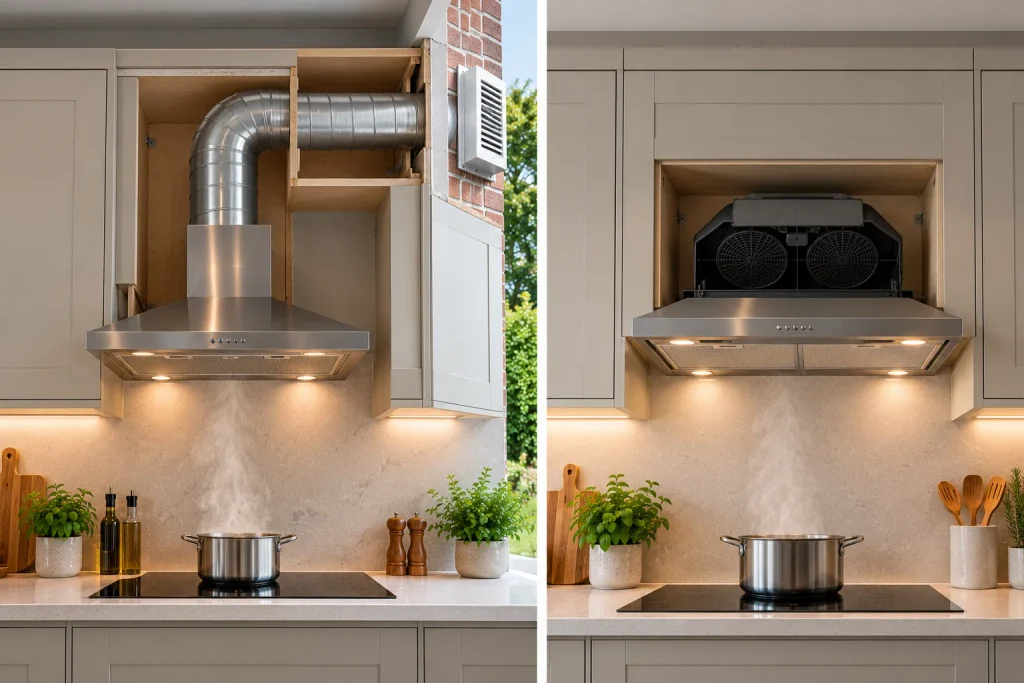
A recirculating hood pulls air through a grease filter, then usually a charcoal filter to deal with smells and sends it back into the kitchen. It’s handy where ducting just isn’t practical, like in some flats or in kitchens without an outside wall nearby.
The downside is that it doesn’t remove moisture. So you’ll still need some other form of ventilation to the outside.
Which System Is Suitable for Your Home?
If you can get a duct outside, a ducted hood is well worth considering. If you can’t, a recirculating model gives you more flexibility, as long as it’s part of a proper ventilation setup.
In England, ventilation rules for homes are covered by Approved Document F of the Building Regulations. What applies depends on your property and the work being done, so it’s worth checking the installation against that guidance.
Cooker Hood Ducting: What Homeowners Need to Know
With a ducted hood, the route the air takes outside makes a real difference to how well it works. Plan it early and you won’t end up cutting into finished cabinets or ceilings.
Planning the Duct Route
Shorter and straighter is generally better. Long runs and lots of bends make the fan work harder, which can mean weaker extraction and more noise. If your kitchen doesn’t have easy access to an outside wall, look at the options before the design is finalised.
Choosing Duct Size and Material
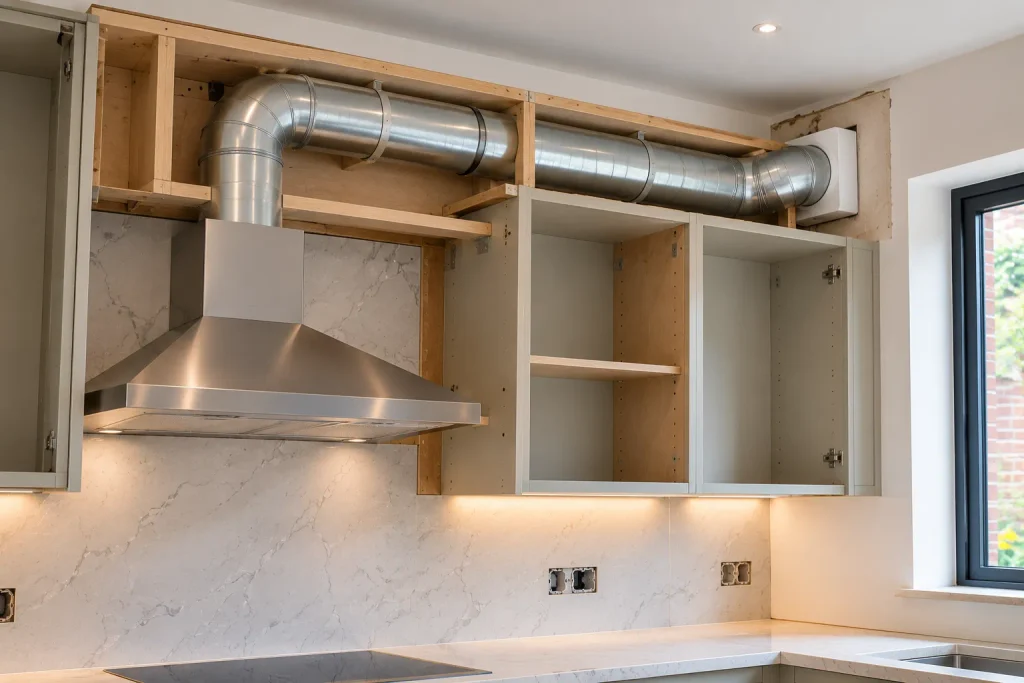
The ducting has to suit the appliance. Stick to the diameter the manufacturer recommends, because going smaller can choke the airflow.
Rigid ducting gives a smooth path for the air and works well for permanent installs. Flexible ducting helps when things don’t line up neatly, but too much length, squashing or tight bends will hold the air back. Choose based on what the installation needs, not what’s easiest.
External Outlets and Airflow Restrictions
The duct needs to finish at a suitable outside vent that lets air out freely. Your installer should also think about weather protection, how it looks on the outside of the house and how close it is to other vents.
How to Choose the Right Kitchen Extractor Fan Size
It’s not just about matching the hood to the hob width. It also needs enough power for the way you cook.
Understanding Airflow Ratings
Extraction power is usually shown in litres per second (l/s) or cubic metres per hour (m³/h). Both tell you how much air the fan moves.
When you compare models, check how those figures were measured. A big number on the box doesn’t always mean the same performance once it’s installed, especially with ducted hoods, where the duct route can knock the real-world airflow down.
Factors That Affect Extraction Requirements
How you cook makes a big difference. If you fry, grill or use several rings at once on a regular basis, you’ll need more from your extractor than someone who mostly boils the kettle and heats up soup.
A few other things to weigh up:
- Hob width: the hood should suit the size of your hob and be fitted to the manufacturer’s instructions
- Open-plan layouts: smells and fumes can easily drift into your living or dining area
- Installation limits: the duct route and the model’s specs both affect how well it’ll perform
- Noise: think about whether you can live with it on the settings you’ll actually use
These give you a much better basis for choosing than room size on its own.
UK Kitchen Ventilation Requirements
For homes in England, Approved Document F sets out the ventilation guidance. It includes different minimum extract rates depending on whether the cooker hood vents outside. A recirculating hood doesn’t count towards the requirement for extract ventilation to the outside.
The exact rules depend on your property and the installation, so if you’re unsure, ask a qualified professional to check.
Noise Levels and Filter Maintenance
Noise and upkeep are what you’ll live with long after the fitters leave, so they’re worth comparing before you buy.
Understanding Extractor Noise Ratings
Noise is measured in decibels (dB). Look at the rating for the settings you’ll really use, not just the quietest one. In an open-plan kitchen, a loud extractor can drown out conversation or the TV. Poor ducting can make things noisier as well, so the appliance and installation need planning together.
Grease Filters vs Odour Filters
Grease filters catch grease before it builds up inside the hood. Many are washable metal filters, though it depends on the model.
Recirculating hoods usually need an odour filter too, normally charcoal. These do a different job and generally need replacing rather than washing. Check which filters your hood uses and whether replacements are easy to get hold of.
Cleaning and Replacement Requirements
How often you’ll need to clean or replace filters depends on the model and how much you cook. Before you buy, check the filters are easy to take out. If they’re struggling to reach, they’re more likely to get neglected and a clogged filter won’t do its job.
Kitchen Extractor Fan Installation: Essential Checks
Get the installation details agreed before your units, worktops and finishes are fixed. That way the extractor can be planned around the cabinets, electrics and other services.
Confirming Installation Clearances
The hood has to go at the height the manufacturer specifies for your type of hob. Clearances can be different for gas and electric hobs, so don’t just position it by eye. Getting it wrong can affect performance and safety.
Checking Electrical and Service Requirements
The extractor needs a suitable electrical connection that meets its specs and the relevant regulations. If you’re going for concealed ducting or an integrated hood, make sure the space and access are planned before the units go in. Electrical work should always be done by a qualified professional.
Professional Installation and Regulatory Considerations
Some kitchens have an outside wall right behind the hob. Others, like flats, older homes and kitchens in the middle of a building, can need a trickier route and more assessment.
If the work affects ventilation, structure or other building services, check what’s required before you start. Structural changes shouldn’t go ahead without the right assessment and permissions.
Common Kitchen Extractor Fan Mistakes to Avoid
Choosing the hood before checking it’ll fit: your favourite model might not suit the space or the duct route
- Assuming recirculating hoods remove moisture: they don’t, so you’ll need ventilation elsewhere
- Forgetting about filter access: awkward filters tend not to get cleaned
- Choosing on looks alone: a stylish hood isn’t much use if it doesn’t have the power or fit you need
- Trusting airflow figures blindly: the duct route can reduce real-world performance
- Leaving it until the end: late changes can mess with cabinet sizes, ceilings and other services
Conclusion
The right kitchen extractor fan is a balance of looks, performance, installation and upkeep. Wall-mounted, integrated, island, ceiling and downdraft designs suit different layouts, while ducted and recirculating systems deal with air in very different ways.
Before you decide, check the specs, think honestly about how you cook and make sure the ventilation setup suits your home. Sort it early and you’ll end up with a kitchen that’s nicer to cook in and easier to look after.