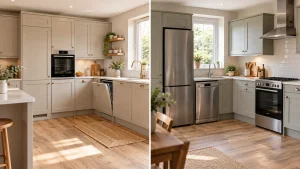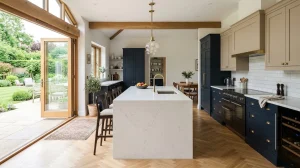
Choosing a new kitchen is one of the biggest decisions homeowners make during a renovation. For many families in Wolverhampton, the biggest style question is often this:
Should you choose a sleek handleless kitchen or a more traditional kitchen design?
Both styles are extremely popular across the UK, but the right choice depends on your property type, lifestyle, budget, and long-term design preferences. In recent years, modern open-plan homes have increased the popularity of minimalist handleless kitchens, while timeless shaker kitchens continue to dominate family homes and period properties.
This guide compares handleless kitchens and traditional kitchens in detail to help Wolverhampton homeowners make the right decision for their home and lifestyle.
What Is a Handleless Kitchen?
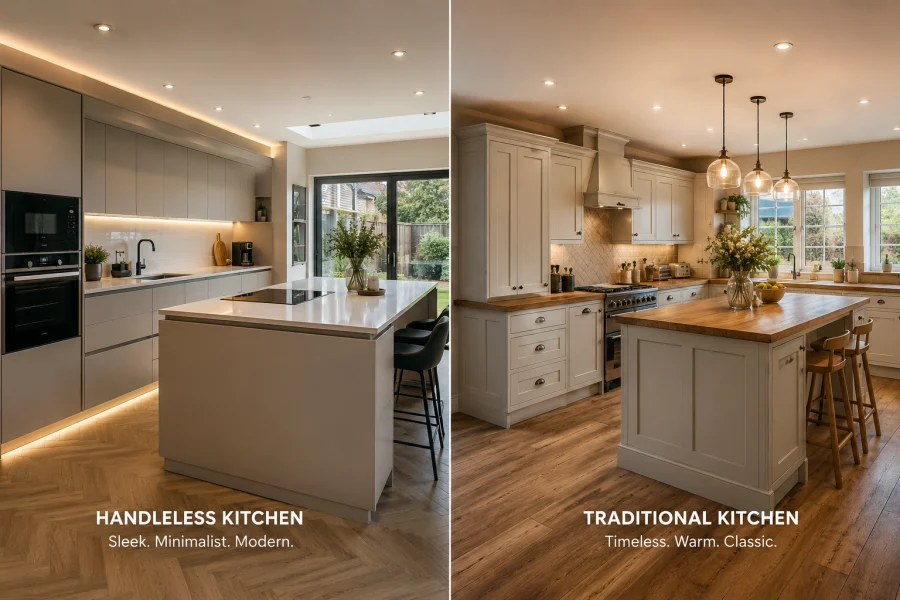
A handleless kitchen is a modern kitchen style that removes visible cabinet handles for a cleaner and more streamlined appearance. Instead of external handles, these kitchens use:
- integrated grip rails
- recessed channels
- J-pull doors
- push-to-open systems
The goal is to create smooth, uninterrupted lines that make the kitchen feel sleek and contemporary.
Handleless kitchens have become one of the most popular modern kitchen choices in the UK because they work beautifully in open-plan spaces and modern family homes. Industry experts continue to describe handleless kitchens as one of the strongest ongoing kitchen trends for 2026.
Key Features of Handleless Kitchens
- Flat slab cabinet doors
- Minimalist appearance
- Clean horizontal lines
- Integrated opening systems
- Contemporary finishes and colours
Popular finishes include:
- matt cashmere
- graphite grey
- matte black
- gloss white
- wood-effect textures
Many homeowners in Wolverhampton choose handleless kitchens for:
- new-build homes
- rear extensions
- open-plan renovations
- modern family kitchens
What Is a Traditional Kitchen?
Traditional kitchens focus on timeless design, classic detailing, and warmer aesthetics. Unlike handleless kitchens, they use visible handles, framed cabinet doors, and decorative features to create a more character-rich appearance.
Traditional kitchens remain especially popular in:
- Victorian properties
- semi-detached family homes
- period homes
- cottage-style interiors
The most common traditional style in the UK is the shaker kitchen, which combines simplicity with timeless craftsmanship.
Key Features of Traditional Kitchens
- Shaker-style cabinet doors
- Decorative handles or knobs
- Framed cabinetry
- Warm neutral colours
- Classic British styling
Popular traditional kitchen styles include:
- painted shaker kitchens
- in-frame kitchens
- oak-effect kitchens
- heritage-inspired kitchens
Traditional kitchens continue to remain highly desirable because they rarely go out of fashion. Design experts still consider shaker kitchens one of the safest long-term style investments for UK homes.
Handleless Kitchens: Pros and Cons
Advantages of Handleless Kitchens
Sleek Modern Appearance
Handleless kitchens create a clean luxury appearance that feels modern and sophisticated. Their smooth surfaces and uninterrupted lines work especially well in contemporary Wolverhampton homes.
Many modern kitchen brands now heavily promote handleless designs because of growing demand for minimalist interiors.
Makes Smaller Kitchens Feel Larger
Without protruding handles, kitchens appear less visually busy. This helps compact kitchens feel more spacious and open.
This is especially useful in:
- smaller terraced homes
- compact extensions
- apartments
- narrow galley kitchens
Lighter colours such as white, cashmere, or light grey further enhance this effect.
Easier Visual Flow in Open-Plan Homes
Open-plan layouts are increasingly common in UK home renovations. Handleless kitchens create smoother transitions between kitchen, dining, and living areas.
The minimalist design also allows other features to stand out more clearly, including:
- quartz worktops
- statement lighting
- splashbacks
- kitchen islands
Modern Lifestyle Appeal
Handleless kitchens pair perfectly with:
- integrated appliances
- hidden storage
- smart kitchen technology
- contemporary lighting systems
This makes them especially attractive to younger homeowners and modern buyers.
Disadvantages of Handleless Kitchens
Fingerprints Can Be More Visible
Gloss finishes and darker colours may show fingerprints more easily, especially in busy family kitchens.
Matte finishes generally reduce this problem significantly.
Rail Channels Need Cleaning
Integrated rails and grip channels can collect:
- crumbs
- dust
- grease
Regular cleaning is usually required to keep the kitchen looking sharp.
Some Styles Can Feel Too Minimal
While many homeowners love minimalist design, others prefer kitchens with more warmth and personality.
Ultra-modern kitchens can sometimes feel less cosy compared to traditional shaker kitchens.
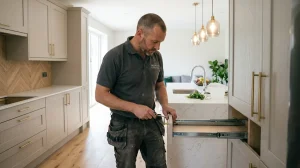
Installation Precision Is Important
Handleless kitchens rely heavily on perfect alignment. Poor installation can make gaps and lines appear uneven.
Experts often note that quality installation matters even more with handleless kitchens because every line is visually exposed.
Traditional Kitchens: Pros and Cons
Advantages of Traditional Kitchens
Timeless Design
Traditional kitchens rarely go out of fashion. Shaker kitchens have remained popular in Britain for decades because they balance simplicity and elegance.
Unlike short-lived design trends, traditional kitchens tend to age very well.
Warm and Welcoming Feel
Traditional kitchens often feel:
- cosier
- softer
- more inviting
This makes them especially suitable for family homes where the kitchen acts as the centre of daily life.
Better for Older Wolverhampton Properties
Many homes in Wolverhampton feature:
- Victorian architecture
- traditional brickwork
- period details
Traditional kitchens often complement these property styles more naturally than ultra-modern designs.
Easier to Personalise
Traditional kitchens allow more flexibility with:
- handles
- colours
- textures
- decorative features
Kitchen handles themselves have become an important design feature in 2026 trends, especially brass, bronze, and aged finishes.
Disadvantages of Traditional Kitchens
Can Look Visually Busier
Handles, grooves, and decorative features create more visual detail. In smaller kitchens, this can sometimes make the space feel slightly busier.
More Cleaning Around Handles
Handles naturally collect:
- grease
- fingerprints
- dust
Cabinet detailing may also require more maintenance than flat slab doors.
Poorly Designed Traditional Kitchens Can Look Dated
Not all traditional kitchens age well. Older designs with outdated colours or excessive detailing can reduce visual appeal.
However, modern shaker kitchens solve this problem by combining classic styling with cleaner contemporary finishes.
Which Kitchen Style Suits Wolverhampton Homes Best?
The best kitchen style often depends on the type of property you own.
Modern New-Build Homes
Handleless kitchens usually work best in:
- modern developments
- apartments
- contemporary extensions
- open-plan layouts
Their minimalist appearance complements modern architecture extremely well.
Victorian and Traditional Homes
Traditional kitchens are often better suited to:
- Victorian terraces
- period properties
- cottage-style homes
- classic family houses
Shaker kitchens help preserve warmth and character while still feeling modern enough for contemporary living.
Small Kitchens
Handleless kitchens can make compact spaces feel visually larger because they reduce visual clutter.
Lighter colours and minimal detailing help create a cleaner, more open appearance.
Family Homes
Both styles work well in family kitchens.
The most important factor is not simply appearance — it is functionality.
A successful family kitchen should prioritise:
- storage
- durability
- workflow
- lighting
- easy maintenance
Which Kitchen Style Is Easier to Maintain?
Both styles are relatively easy to maintain, but there are practical differences.
Handleless Kitchens
Easier:
- wiping flat surfaces
- maintaining minimalist cabinet fronts
Harder:
- cleaning rail channels
- keeping gloss finishes fingerprint-free
Matt finishes are usually easier to maintain than high-gloss surfaces.
Traditional Kitchens
Easier:
- replacing damaged handles
- hiding fingerprints on textured finishes
Harder:
- cleaning around handles
- maintaining grooves and detailing
For busy family homes, simple shaker designs are often easier to maintain than heavily decorative kitchens.
Cost Comparison: Handleless vs Traditional Kitchens
Kitchen pricing varies depending on:
- room size
- cabinet quality
- worktops
- appliances
- lighting
- structural work
- installation complexity
In the UK, most kitchen renovation projects in 2026 typically range between:
- £7,000–£15,000 for standard renovations
- £15,000–£30,000 for mid-range kitchens
- £30,000+ for premium bespoke projects
Many fully fitted kitchens in the UK commonly fall around the £10,000–£25,000 range depending on specification.
Are Handleless Kitchens More Expensive?
Handleless kitchens can sometimes cost slightly more because of:
- integrated rail systems
- specialist hardware
- precision installation
However, pricing differences are often smaller than homeowners expect.
The biggest cost drivers are usually:
- cabinetry quality
- quartz or stone worktops
- appliance choices
- bespoke features
Which Kitchen Style Adds More Value to Your Home?
Both styles can increase property value when professionally designed and installed.
Handleless Kitchens Appeal To:
- modern buyers
- younger homeowners
- contemporary property buyers
Traditional Kitchens Appeal To:
- family buyers
- period property owners
- long-term homeowners
Property experts consistently state that kitchens strongly influence buyer decisions because they are one of the most expensive rooms to replace.
In most cases, quality matters more than trends alone.
A well-designed kitchen with:
- durable materials
- smart storage
- quality workmanship
- professional installation
will almost always outperform a poorly designed kitchen regardless of style.
Popular Kitchen Trends in Wolverhampton Right Now
Current UK kitchen trends are increasingly blending modern and traditional design together.
Popular trends include:
- matte handleless kitchens
- warm neutral colours
- slim shaker cabinetry
- two-tone kitchens
- natural oak textures
- quartz worktops
- hidden storage
- statement islands
“Slim shaker” kitchens are becoming especially popular because they combine classic character with cleaner modern lines.
Many homeowners now prefer kitchens that feel timeless rather than overly trend-driven.
How to Choose the Right Kitchen for Your Lifestyle
Before choosing a kitchen style, think about how you use your kitchen every day.
Ask yourself:
- Do you cook frequently?
- Do you have children?
- Do you prefer modern or classic interiors?
- How important is easy cleaning?
- Do you want a timeless design?
- Are you planning to sell your home later?
The best kitchen is one you will still enjoy using many years from now.
Visit Our Wolverhampton Kitchen Showroom
Seeing kitchen styles in person can make the decision much easier.
At Wulfrun Kitchens & Bathrooms, homeowners can explore:
- handleless kitchens
- shaker kitchens
- modern fitted kitchens
- storage solutions
- worktop materials
- colour combinations
- appliance options
A professional kitchen consultation helps homeowners choose a design that fits:
- their property
- lifestyle
- storage needs
- long-term goals
Whether you prefer sleek contemporary design or timeless classic charm, expert guidance can help create a kitchen that looks beautiful and functions perfectly for years to come.
Final Thoughts
Both handleless kitchens and traditional kitchens offer excellent benefits for Wolverhampton homeowners.
Handleless kitchens are ideal for:
- sleek modern interiors
- minimalist homes
- open-plan living
- contemporary renovations
Traditional kitchens are perfect for:
- timeless family homes
- period properties
- warmer interiors
- classic British design lovers
The best kitchen style depends on your:
- property type
- lifestyle
- storage requirements
- budget
- long-term preferences
A professionally designed kitchen should not only look beautiful but also improve how your home functions every day.
For expert advice and inspiration, visiting a showroom and speaking with experienced kitchen designers can help you make the right long-term decision.
FAQ’s
Are handleless kitchens still popular in 2026?
Yes. Industry experts confirm that handleless kitchens remain one of the strongest modern kitchen trends in 2026 because of their minimalist appearance and practicality.
Do traditional kitchens go out of style?
No. Traditional shaker kitchens remain one of the most timeless kitchen styles in the UK and continue to evolve with modern finishes and layouts.
Which kitchen style is easier to clean?
Handleless kitchens are easier to wipe down because of their flat surfaces, while traditional kitchens may require more cleaning around handles and detailing.
Are handleless kitchens more expensive?
Sometimes slightly, mainly because of specialist rail systems and precision installation requirements.
Which kitchen style works best in small kitchens?
Handleless kitchens often work especially well in smaller kitchens because they create a cleaner and more spacious visual appearance.
Can you combine modern and traditional kitchen styles?
Yes. Modern shaker kitchens combine classic cabinet designs with contemporary finishes and are becoming increasingly popular across UK homes.