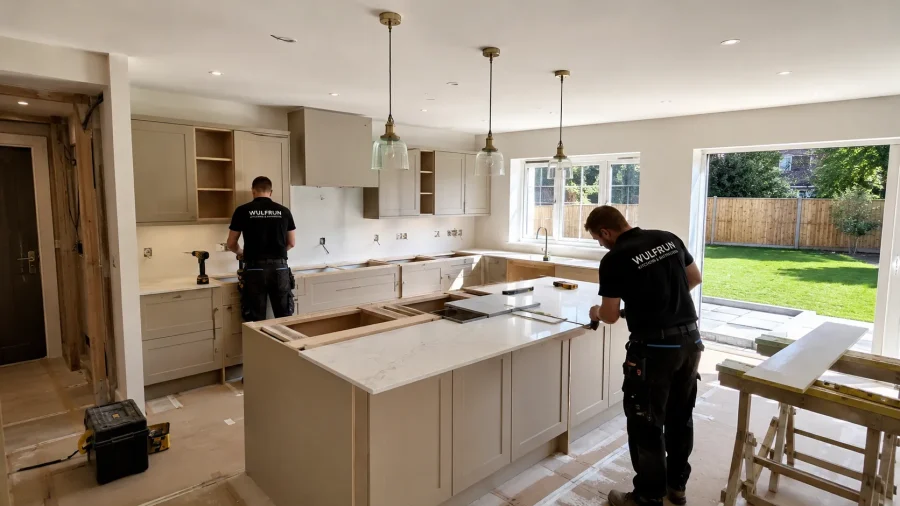
A kitchen renovation is one of the biggest investments many homeowners make in their property. Beyond improving appearance, a well-designed kitchen can increase functionality, improve storage, enhance daily living, and potentially add value to a home.
For many homeowners in Walsall, the biggest concern isn’t choosing cabinet colours or worktops — it’s understanding what actually happens during the renovation process.
Questions like:
- How long will the renovation take?
- Will I be without a kitchen for weeks?
- How disruptive will the work be?
- What if unexpected problems are found?
- How much should I realistically budget?
are completely normal.
The good news is that when a renovation is properly planned and professionally managed, the process becomes far more predictable and less stressful than many people expect.
This guide explains exactly what homeowners in Walsall can expect during a kitchen renovation, from the first design consultation to the final handover.
Understanding the Kitchen Renovation Process
Every kitchen renovation is unique because every home is different.
A small kitchen replacement in a modern property may be completed relatively quickly, while a larger renovation involving wall removals, electrical upgrades, or structural changes naturally requires more time.
Most kitchen projects typically follow the same overall process:
- Initial consultation and design
- Site survey and measurements
- Product selection
- Planning and scheduling
- Removal of the old kitchen
- Plumbing and electrical work
- Installation of the new kitchen
- Finishing works and inspections
For many Walsall homeowners, the entire journey from initial consultation to completed installation can take several weeks or months depending on product lead times, bespoke design requirements, and the complexity of the project.
Professional kitchen companies such as Wulfrun Kitchens & Bathrooms provide a fully managed process including design, supply, project management, and installation, helping reduce stress and improve communication throughout the project.
Step 1: Initial Consultation and Design Planning
Every successful kitchen renovation starts with detailed planning.
This stage is often underestimated, but it is arguably the most important part of the entire project.
Understanding How You Actually Use Your Kitchen
Many homeowners initially focus on appearance.
However, experienced kitchen designers usually begin by understanding lifestyle requirements first.
Questions often include:
- How many people use the kitchen daily?
- Do you cook frequently?
- Do you entertain guests?
- Do you need more storage?
- Is the kitchen used as a family gathering space?
- Do you work from home and use the kitchen throughout the day?
For example, a young family in Walsall may prioritise storage, durability, and easy-to-clean surfaces, while a retired couple may focus more on accessibility, comfort, and aesthetics.
Measuring and Surveying the Existing Space
Accurate measurements are essential because even small errors can create installation problems later.
During the survey, professionals assess:
- Room dimensions
- Existing pipework
- Electrical systems
- Windows and doors
- Appliance locations
- Ventilation requirements
- Wall conditions
- Floor levels
This stage often identifies challenges before work begins, helping avoid costly surprises later.
Visualising the Design Before Installation
Modern kitchen companies increasingly use 3D visualisation software that allows homeowners to see the finished design before any work starts.
This helps customers understand:
- Layout flow
- Cabinet positioning
- Colour combinations
- Appliance placement
- Storage solutions
Wulfrun Kitchens & Bathrooms offers 3D kitchen visualisation as part of its design process, allowing homeowners to review layouts and finishes before approving the project.
Step 2: Finalising the Design and Budget
Once the layout is approved, attention turns to selecting materials, finishes, and products.
Choosing Kitchen Styles and Materials
This stage often takes longer than homeowners expect because there are many decisions involved.
Typical selections include:
- Cabinet style
- Door finishes
- Worktops
- Splashbacks
- Flooring
- Handles
- Lighting
- Appliances
Popular kitchen styles across Wolverhampton and Walsall currently include:
- Modern handleless kitchens
- Contemporary kitchens
- Shaker kitchens
- Traditional kitchens
Traditional kitchens remain particularly popular in family homes because they combine timeless aesthetics with practical functionality.
Understanding Realistic Kitchen Costs
Kitchen renovation costs vary significantly depending on size, materials, and complexity.
As a general guide:
- Basic kitchen upgrades may focus primarily on replacing units and worktops.
- Mid-range renovations often include new appliances, improved lighting, upgraded storage, and higher-quality finishes.
- Premium renovations may involve bespoke cabinetry, quartz worktops, structural alterations, and luxury appliances.
Many homeowners underestimate the impact that plumbing, electrical work, flooring, and decorating can have on the overall budget.
A realistic contingency allowance is often recommended because older properties occasionally reveal hidden issues during renovation.
Step 3: Preparing Your Home Before Work Begins
Preparation can significantly reduce disruption during installation.
Clearing the Kitchen
Before installers arrive, homeowners usually need to remove:
- Food supplies
- Plates and cutlery
- Small appliances
- Decorations
- Personal belongings
Many people underestimate how much storage a kitchen contains until everything needs to be packed away.
Creating a Temporary Kitchen Area
Most households remain in their home throughout the renovation.
Creating a temporary kitchen space can make daily life much easier.
Many families set up:
- A microwave
- Kettle
- Toaster
- Air fryer
- Small refrigerator
in a dining room, utility room, or conservatory.
This simple preparation can greatly reduce frustration during installation.
Managing Family Expectations
One of the most practical things homeowners can do is mentally prepare for temporary disruption.
Even the most organised kitchen project involves:
- Dust
- Noise
- Deliveries
- Tradespeople entering the property
Understanding this beforehand helps reduce stress throughout the project.
Step 4: Removal of the Existing Kitchen
This is where the physical transformation begins.
The Strip-Out Phase
The old kitchen is carefully removed, including:
- Cabinets
- Worktops
- Appliances
- Tiles where necessary
This stage often takes one to two days depending on kitchen size.
Hidden Issues Are Common in Older Homes
Many properties in Walsall were built decades ago.
As a result, installers occasionally discover:
- Old wiring
- Damaged pipework
- Uneven walls
- Poor previous workmanship
- Damp issues
These problems are often impossible to identify until the existing kitchen is removed.
Although unexpected discoveries can sometimes affect timelines, resolving them properly helps ensure the new kitchen remains safe and durable long-term.
Step 5: First Fix Plumbing, Electrical and Building Works
This stage focuses on preparing the room for the new installation.
Electrical Upgrades
Modern kitchens require significantly more electrical planning than kitchens installed twenty years ago.
Many homeowners now want:
- Under-cabinet lighting
- USB sockets
- Integrated appliances
- Feature pendant lighting
- Additional power outlets
Electrical systems are upgraded accordingly.
Plumbing Modifications
If sinks, dishwashers, or appliances are being relocated, pipework must often be adjusted.
This ensures everything functions correctly once installation is complete.
Structural Alterations
Some homeowners choose to create open-plan kitchens by removing internal walls.
These projects require:
- Structural assessments
- Building regulation compliance
- Additional construction work
While this increases project complexity, the results can dramatically improve how a home feels and functions.
Step 6: Installing the New Kitchen
For most homeowners, this is the most exciting phase.
The room finally starts looking like a kitchen again.
Cabinet Installation
Installers carefully fit:
- Base units
- Wall cabinets
- Tall housing units
- Pantry storage systems
Precision is critical because even small alignment issues can affect the final appearance.
Worktop Installation
Worktops are usually fitted after cabinetry is installed.
Quartz remains one of the most popular choices because it combines durability, low maintenance, and premium appearance.
Other common options include:
- Granite
- Laminate
- Solid wood
- Compact laminate surfaces
Appliance Installation
The kitchen begins to come together once appliances are installed.
This may include:
- Ovens
- Hobs
- Extractors
- Dishwashers
- Refrigerators
At this stage homeowners can finally visualise how the completed space will function.
Step 7: Finishing Touches and Quality Checks
The final stage focuses on details.
Finishing Works
This often includes:
- Silicone sealing
- Decorating
- Hardware installation
- Lighting adjustments
- Final cleaning
Although these tasks seem minor, they have a major impact on the overall appearance of the kitchen.
Comprehensive Testing
Before handover, installers normally test:
- Electrical systems
- Water connections
- Appliances
- Cabinet operation
- Lighting functions
Professional kitchen companies aim to ensure everything works correctly before the customer starts using the space.
Final Walkthrough
The homeowner is usually taken through the completed kitchen and shown:
- Appliance operation
- Maintenance guidance
- Warranty information
- Care recommendations
This provides confidence that the kitchen is ready for everyday use.
Common Challenges During a Kitchen Renovation
Even well-managed projects occasionally face challenges.
These may include:
Product Lead Times
Certain bespoke products can require additional manufacturing time.
Unexpected Building Issues
Older homes sometimes reveal problems that require corrective work.
Temporary Living Disruption
For many families, not having a fully functioning kitchen for a short period is the most challenging part of the project.
The key is planning ahead and maintaining realistic expectations.
Why Professional Project Management Matters
One of the biggest reasons renovations become stressful is poor coordination between trades.
A professionally managed kitchen project helps coordinate:
- Designers
- Suppliers
- Electricians
- Plumbers
- Fitters
- Decorators
This reduces delays and keeps communication clear throughout the renovation.
Wulfrun Kitchens & Bathrooms provides a fully managed design, supply, project management, and installation service across Wolverhampton, Walsall, Dudley, Bridgnorth, Wombourne, and surrounding South Staffordshire areas. The company also offers free design consultations and showroom visits to help homeowners explore layouts, materials, and kitchen styles before committing to a renovation.
Start Your Kitchen Renovation in Walsall with Confidence
A kitchen renovation is a major project, but understanding the process makes it far easier to manage expectations and prepare properly.
From the initial consultation and design phase through to installation and final handover, every stage plays an important role in creating a kitchen that is both beautiful and practical.
Whether you’re planning a modern handleless kitchen, a traditional shaker design, or a fully bespoke family kitchen, working with experienced professionals can help ensure a smoother and more enjoyable renovation experience.
Homeowners across Walsall can visit the Wolverhampton showroom of Wulfrun Kitchens & Bathrooms to explore kitchen displays, compare materials, discuss design ideas, and receive expert guidance before starting their project. The company offers free consultations, 3D design services, project management, and professional installation from start to finish.
FAQ’s
How long does a kitchen renovation usually take?
Most installations take several weeks depending on complexity, product availability, and any structural work required.
Can I stay in my house during the renovation?
Yes. Most homeowners remain in their property throughout the project.
Will there be a lot of dust?
Some dust is unavoidable, especially during demolition and building work, but professional installers normally take protective measures to minimise disruption.
What is the most disruptive stage?
Removing the existing kitchen and completing first-fix building works are usually the most disruptive stages.
Do I need planning permission?
Most kitchen renovations do not require planning permission unless extensions or significant structural alterations are involved.